
Best Water Bottle Clip: Strap Holders Win in 2026

Best overall: a strap-and-carabiner water bottle holder. Best for a MOLLE backpack: a MOLLE-mounted bottle clip. Best minimalist option: a bottle-neck clip. This 2026 water bottle clip guide ranks attachment styles by bottle fit, retention, access, and how much they swing—not how aggressively tactical the packaging looks.
- Choose a strap-and-carabiner water bottle clip for adjustable attachment around a bottle with a retaining shoulder.
- Choose a MOLLE-mounted bottle clip when your backpack has compatible webbing and the bottle interface fits.
- Use bottle-neck clips only when the retaining opening matches your bottle below its neck flange.
- Stickthison serves gun owners looking for parody patches, stickers, and EDC gear; bottle retention needs a separate fit check.
Why this matters
A bottle hanging off your range bag is convenient until it becomes a pendulum with hydration ambitions. The right attachment keeps your water accessible without blocking a zipper, catching a seat belt, or repeatedly introducing itself to your knee.
Water adds real weight: 1 liter of water weighs approximately 1 kilogram, before you count the bottle. A clip that looks fine while empty deserves another inspection when loaded.
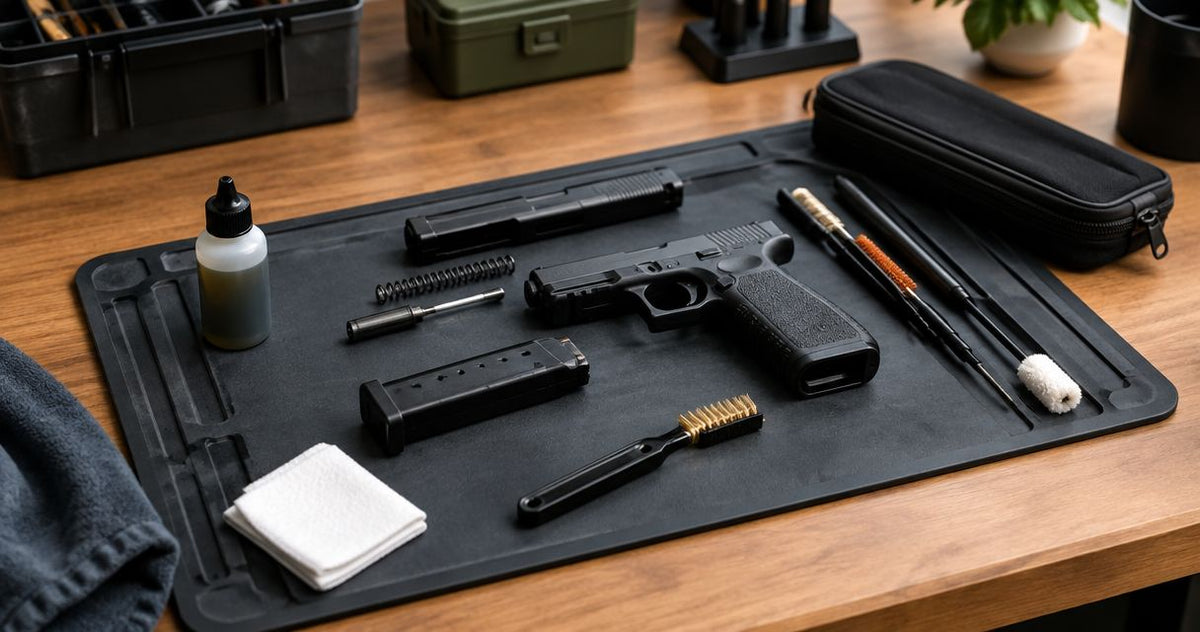
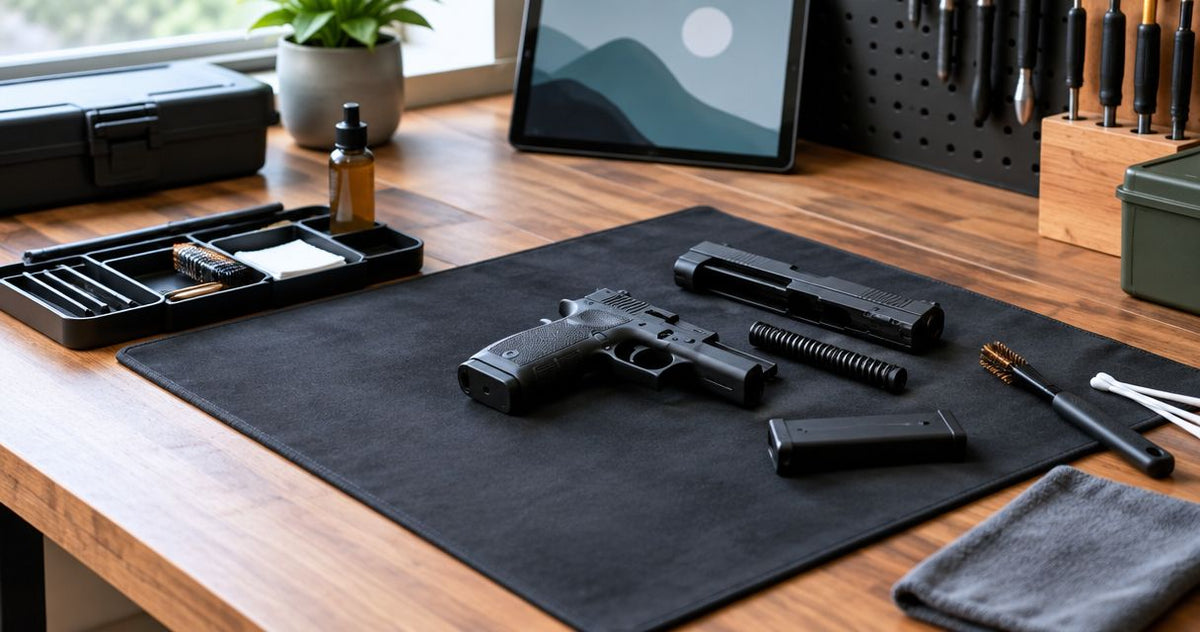
Stickthison sells parody and morale PVC patches, apparel, stickers, and gun cleaning mats for gun owners and EDC enthusiasts. The distinction matters here: decorating your gear and securely carrying water are separate jobs. Let the patch deliver the punchline; let the attachment carry the bottle.
What makes the best water bottle clip?
For your 2026 setup, prioritize these five criteria before choosing a style:
- Bottle fit: Identify what retains the bottle: a neck flange, body shoulder, strap, or carrying handle. A clip cannot grab a feature your bottle does not have.
- Retention: Inspect both connections—the bottle-to-holder interface and the holder-to-bag interface. A secure carabiner does not fix a slipping bottle strap.
- Mounting compatibility: Match the attachment to actual webbing, a suitable ring, or a carrying loop. A morale-patch panel is not a bottle anchor.
- Access: Decide whether you want to release the entire bottle or drink while it remains attached. Those are different setups.
- Movement control: Favor a short attachment and a position close to the bag. More free-hanging length means more room for the bottle to move.
Fit beats material bragging. Metal hardware does not rescue the wrong geometry, and a chunky clip is not proof that your bottle will stay put.
Water bottle clip options at a glance
These are attachment categories, not interchangeable products. Check the specifications of the exact item you choose; a shared category name does not establish identical dimensions, closures, or compatibility.
| Rank | Attachment style | Best for | Standout feature | Key limitation |
|---|---|---|---|---|
| 1 | Strap-and-carabiner holder | Adjustable bottle-body attachment | Strap position can be adjusted around the bottle | Can slip on a smooth bottle without a retaining shoulder |
| 2 | MOLLE-mounted bottle clip | Dedicated backpack webbing | Mounts directly to compatible webbing | Bottle interface still needs a separate fit check |
| 3 | Bottle-neck clip | Minimalist disposable-bottle carry | Retains the bottle beneath a matching neck flange | Neck geometry is not universal |
| 4 | Locking carabiner through a handle | Bottles with a suitable carrying handle | Direct attachment without a body strap | Depends on the handle and lid connection |
| 5 | Retained bottle pouch | Carry that needs less free movement | Supports the bottle body rather than one attachment point | Takes more mounting space than a clip |
1. Strap-and-carabiner holder: best for adjustable bottle fit
A strap-and-carabiner holder wraps around the bottle and connects to your bag through separate hardware. It is the default recommendation when you want adjustable positioning rather than a fixed opening that must match one neck shape.
Look for a bottle shoulder or other geometry that physically stops the strap from sliding off. Friction alone deserves suspicion, especially when the bottle surface is smooth. Tactical confidence is not an attachment method.
Strap-and-carabiner holder pros:
- Adjustable straps let you position the holder around the bottle body.
- Separate connection hardware gives you a clear release point.
- You can inspect strap placement without taking the bottle apart.
- A short connection can keep the bottle close to the bag.
Strap-and-carabiner holder cons:
- A smooth, straight-sided bottle offers no positive stop against slipping.
- Loose strap ends can catch on nearby equipment.
- The bottle still swings if it hangs from one unsupported point.
Best for: Range-goers who want an adjustable holder and have a bottle with suitable retaining geometry.
Before committing, fit the strap to the filled bottle and check whether it can move past the shoulder. Inspect the closure separately from the carabiner. Neither component gets to borrow credibility from the other.
Verdict: Buy for adjustable fit; skip if the strap can slide off your bottle.
2. MOLLE-mounted bottle clip: best for backpack webbing
A MOLLE-mounted bottle clip attaches to compatible webbing on a backpack or other carrier. That describes the bag-side connection, not necessarily the bottle-side connection: the bottle might still need a matching neck, loop, or retaining holder.
For a 2026 range-bag setup, this style makes sense when you have an accessible webbing position that leaves the bottle clear of pockets and closures. Putting it on the most visible row is not automatically putting it in the best place.
MOLLE-mounted bottle clip pros:
- Uses existing compatible webbing instead of requiring a separate bag ring.
- Lets you choose a mounting position around the bag.
- Keeps the attachment assigned to a specific carrying location.
MOLLE-mounted bottle clip cons:
- Webbing compatibility does not establish bottle compatibility.
- A single hanging connection does not prevent bottle movement.
- Poor placement can obstruct a pocket or interfere with carrying the bag.
Best for: Backpack owners with compatible webbing and a confirmed match between the clip and bottle.
Follow the attachment's mounting instructions. Then inspect the loaded setup from the side: the bottle should not hide a release buckle, sit against a zipper you need, or occupy the space where your arm moves.
Verdict: Buy for a dedicated webbing mount; skip if bottle fit is only assumed.
3. Bottle-neck clip: best for minimalist disposable-bottle carry
A bottle-neck clip holds a bottle beneath a retaining flange or shoulder near the neck. It avoids a body strap, but its opening must match the bottle geometry closely enough to retain it.
This is a fit-first purchase. Two bottles that look similar on a shelf can have different neck shapes, so do not treat the phrase water bottle clip as a universal compatibility promise.
Bottle-neck clip pros:
- Avoids wrapping a strap around the bottle body.
- Leaves most of the bottle unobstructed.
- Gives you a straightforward retaining interface to inspect.
Bottle-neck clip cons:
- An opening that clears the retaining flange cannot reliably hold beneath it.
- A neck clip does not solve swinging by itself.
- Changing bottle designs means checking fit again.
Best for: Minimalist carry with a disposable bottle whose neck flange positively retains the clip.
Check whether removal requires an intentional release motion. If a normal sideways movement lets the bottle escape, that is not quick access. That is your water planning an unauthorized departure.
Verdict: Buy for a confirmed neck match; skip for unspecified universal fit.
4. Locking carabiner: best for bottles with carrying handles
A locking carabiner can connect a bottle's carrying handle to a suitable bag attachment point. It eliminates a separate neck clip or body strap, but only when the handle is intended to carry the filled bottle.
The gate lock addresses opening at the carabiner. It does not strengthen the handle, lid, hinge, or bag loop. Follow the load through every component instead of admiring the metal bit and calling the investigation complete.
Locking carabiner pros:
- Connects directly to a suitable carrying handle.
- A locking gate requires an additional action before opening.
- Avoids a separate bottle-body holder.
Locking carabiner cons:
- A decorative loop or cap tether is not automatically a carrying handle.
- Locking and unlocking adds a step to bottle removal.
- The entire setup depends on the handle and its connection to the bottle.
Best for: Reusable bottles with manufacturer-confirmed carrying handles and a suitable bag anchor.
Do not suspend a bottle from a drinking spout or a tether merely because a carabiner fits through it. And do not confuse accessory hardware with climbing equipment. Carrying water is the job here; leave the improvised action-movie audition out of it.
Verdict: Buy when the handle is intended for loaded carry; skip cap-tether improvisations.
5. Retained bottle pouch: best for controlling bottle movement
A retained bottle pouch supports the bottle body instead of suspending the entire load from a neck or handle. It is included as the alternative for readers whose real problem is movement, not lack of a clip.
Choose a pouch that fits the bottle and has an appropriate retention method. An open sleeve and a retained pouch are not the same thing when the bag tips over.
Retained bottle pouch pros:
- Supports the bottle across more of its body.
- Limits the free-hanging movement associated with a clip alone.
- Does not require a neck flange or carrying handle.
Retained bottle pouch cons:
- Occupies more bag space than small attachment hardware.
- Bottle diameter and height still need checking.
- Retention closures add a step when removing the bottle.
Best for: Range bags and backpacks where a dangling bottle repeatedly gets in the way.
A 500-milliliter fill adds approximately 0.5 kilograms of water. If that load keeps knocking into you, changing clip materials misses the point. Supporting the bottle body is the more relevant change.
Verdict: Buy when movement is the problem; skip if a dedicated bottle pocket already works.
Check the loaded setup before range day
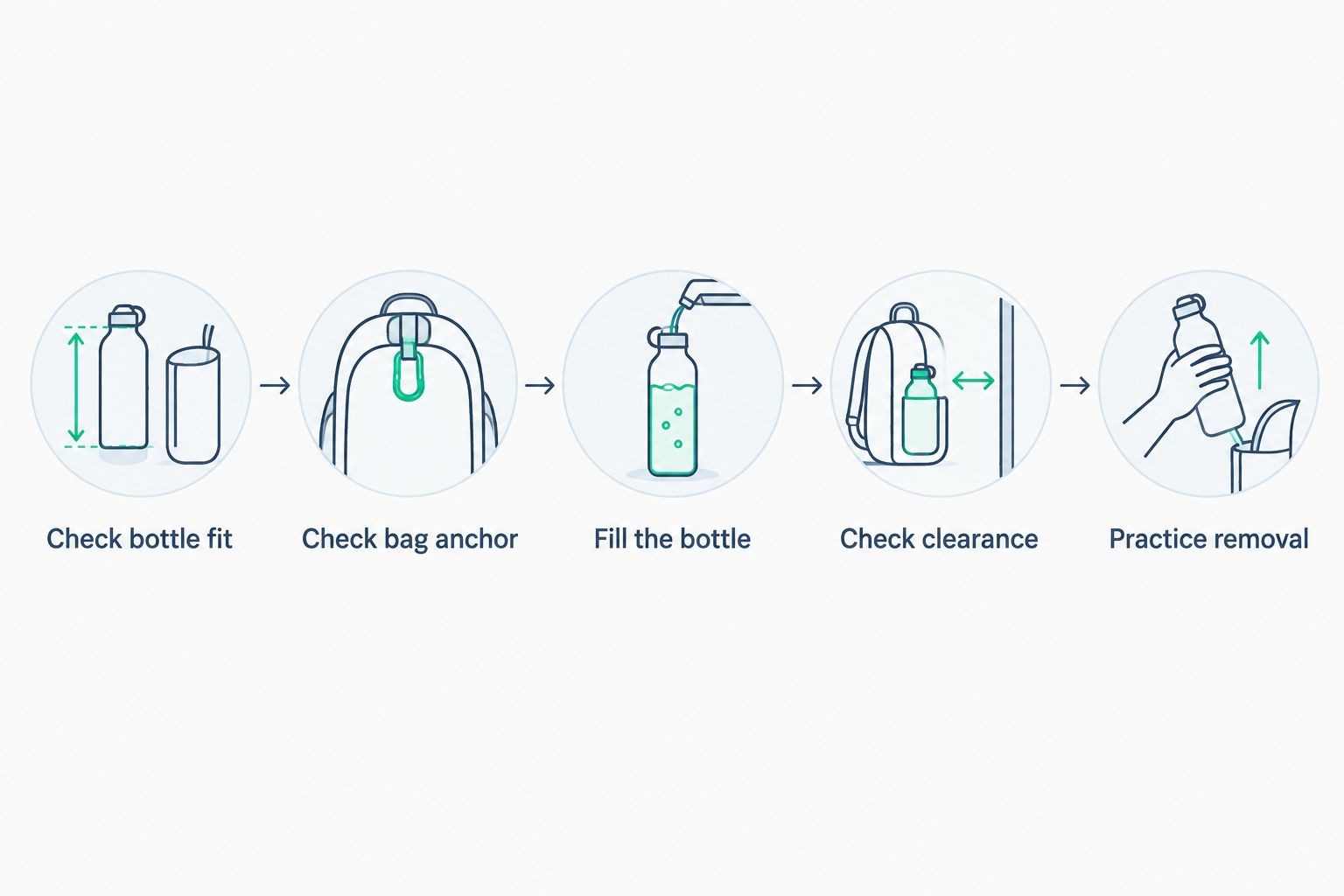
Use this sequence for any water bottle clip you consider in 2026. Test over a clear surface, away from anything you do not want a dropped bottle landing on.
- Check bottle fit. Confirm the strap, flange, or handle actually retains the bottle.
- Check bag anchor. Inspect the webbing, ring, or loop and the hardware connected to it.
- Fill the bottle. Test with the amount of water you intend to carry, not an empty demonstration prop.
- Check clearance. Walk, lift the bag, open pockets, and confirm the bottle does not obstruct normal use.
- Practice removal. Make sure you can intentionally release the bottle without accidentally opening another connection.
A 2-liter fill adds approximately 2 kilograms of water, excluding the container. If you change bottle size, repeat the checks rather than assuming yesterday's setup covers today's load.
Stickthison morale patches can handle the bag's personality. The bottle attachment needs to handle the actual bottle; sarcasm supplies no retention.
How we ranked these attachment styles
This 2026 ranking prioritizes fit, retention, mounting compatibility, access, and movement control. It compares attachment designs rather than claiming measured performance for unnamed products.
The strap-and-carabiner holder takes the default slot because its adjustable interface offers a practical starting point. The other picks solve narrower problems: webbing placement, neck attachment, handle attachment, or body support. Choose the category that matches your bottle before choosing the hardware within it.
Which water bottle clip should you choose?
Start with a strap-and-carabiner holder if your bottle has a shoulder that retains the strap. Choose a MOLLE-mounted bottle clip for compatible backpack webbing, a neck clip for a verified neck match, or a locking carabiner for an intended carrying handle.
If your bottle keeps swinging into things, choose a retained pouch instead. You do not need to win an argument with a clip. You need water that stays where you put it.
FAQ
What's the best water bottle clip for tactical gear in 2026?
A strap-and-carabiner holder is the default choice when its strap fits beneath a retaining bottle shoulder. Choose a different attachment if your bottle lacks suitable geometry or your bag needs a dedicated webbing mount.
Will any water bottle clip fit my bottle?
No, bottle clips are not universally compatible. Check the exact neck opening, strap adjustment, or carrying-handle requirements against your bottle.
Is a MOLLE bottle clip better than a carabiner?
A MOLLE bottle clip is better suited to a dedicated compatible webbing position; a carabiner suits a suitable ring or loop. Neither connection establishes whether the bottle-side attachment fits.
Can I attach a bottle by its lid loop?
Only use a lid loop when the manufacturer identifies it as suitable for carrying the filled bottle. A cap tether or drinking-spout loop should not be treated as a carrying handle.
How do I stop a clipped bottle from swinging?
Use a retained bottle pouch when body support is needed to control movement. A short clip connection reduces free-hanging length but does not support the bottle body.
Does a locking carabiner make the whole setup secure?
No, a locking gate only addresses opening at the carabiner. The bottle handle, lid connection, bag anchor, and mounting hardware still need inspection.
Should I put a water bottle clip on my plate carrier?
Choose a mounting location that leaves your carrier's releases and adjustments unobstructed. Check the complete loaded setup and follow the equipment manufacturer's instructions before attaching accessories.
One last thing
Your existing bottle pocket might be the best upgrade you never bought. Try it with your filled bottle before adding hardware. If it retains the bottle, allows access, and keeps it out of your way, the clip has no problem left to solve.
Keep your 2026 setup useful first. Stickthison can supply the joke; your hydration arrangement does not need to become one.

Comments