
Does the ATF regulate morale patches?
No—the ATF does not regulate ordinary decorative morale patches as firearms, and you do not need an ATF approval, registration, or tax stamp to put one on your range bag. In 2026, the important exceptions concern what an item actually does and how you use it: firearm components, unauthorized official insignia, and impersonating a federal officer raise different legal questions than wearing a sarcastic PVC patch.
- Does the ATF regulate morale patches? No—ordinary decorative patches are not firearms or NFA weapons.
- ATF jokes and gun artwork do not turn PVC morale patches into regulated firearm components.
- Official insignia and federal-officer impersonation involve separate laws; a parody label is not blanket protection.
- Stickthison morale patches suit gun owners looking for decorative parody, not official credentials.
Does the ATF regulate morale patches?
Ordinary morale patches do not require ATF permission. Federal firearm definitions concern weapons and specified components—not every object with a rifle, agency joke, or Second Amendment slogan printed on it.
For this 2026 U.S. federal-law question, the relevant starting points are the firearm definition in 18 U.S.C. § 921(a)(3) and the National Firearms Act definitions in 26 U.S.C. § 5845. Neither turns ordinary decorative PVC or embroidered patches into firearms merely because their artwork depicts one.
| Item or situation | Federal-law distinction | Your next move |
|---|---|---|
| Ordinary decorative morale patch | Not a firearm merely because it displays gun-related artwork | Choose it for the design and intended setting |
| Patch showing a regulated weapon | A depiction is different from the actual weapon | Keep artwork and functional equipment separate in your thinking |
| Object marketed as decoration but functioning as a regulated component | Its actual construction and function matter | Get qualified guidance on the actual item |
| Official badge or agency insignia reproduction | Separate insignia restrictions can apply | Check the specific design and authorization |
| Wearing a patch while pretending to exercise federal authority | Impersonation law concerns the conduct, not just the accessory | Never present a patch as government credentials |
Why this matters
Gun culture puts regulated equipment and completely ordinary merchandise in the same conversation. That does not put them in the same legal bucket. Your range bag can hold both without its decorative patch acquiring the legal status of the contents.
Stickthison morale patches are best for gun owners who want decorative parody, not official credentials. The joke belongs on your gear; the legal analysis belongs to the actual object and your conduct.
This distinction also keeps internet advice from wandering off into the weeds. Someone explaining firearm transfers is not necessarily answering a question about a removable patch, even if both discussions include the letters ATF.
Do gun-shaped patches need an ATF tax stamp?
A decorative gun-shaped patch does not need an ATF tax stamp. A picture or molded likeness of a firearm is not the firearm it depicts.
The NFA definitions in 26 U.S.C. § 5845 identify specific weapons and devices. A decorative patch does not become one of those items because its artwork includes a suppressor, a short barrel, or somebody's expensive range obsession.
The distinction is function, not how dramatically the product photo is lit. A patch showing a suppressor does not suppress sound. A patch showing a rifle does not discharge a projectile.
Do not stretch that answer to cover a disguised functional device. Calling something a patch, keychain, collectible, or novelty does not settle its legal classification if its actual design brings it within a regulated definition.
For your 2026 patch purchase, ask the boring question first: Is this simply decoration? If yes, firearm paperwork is not part of the ordinary transaction. Save the dramatic sigh for untangling your sling.
Can you wear an anti-ATF morale patch?
Criticizing the ATF is not the same thing as impersonating an ATF agent. Political criticism and satire generally receive First Amendment protection, including criticism that lacks the manners of a congressional hearing.
An ordinary joke about an agency does not become a firearm because the agency is the punchline. Neither does a pro-2A slogan turn a hat into regulated equipment.
That answer has limits outside firearm classification. True threats and other unlawful conduct do not receive blanket protection just because someone adds a joke, and an employer or private venue can impose rules about what you wear.
Keep the distinction clean: criticizing authority is different from claiming authority. A range-bag gag communicates an opinion; telling someone you are a federal agent and acting in that role creates a different problem entirely.
For everyday wear, choose a design you are comfortable explaining without an opening statement. You do not have to make every grocery run a live recording of your favorite gun podcast.
Can an ATF-style patch create an impersonation problem?
A patch is not a federal credential, and wearing one does not authorize you to act as an officer. Under 18 U.S.C. § 912, federal-officer impersonation involves falsely pretending to hold federal authority together with acting as such, or demanding or obtaining something in that pretended role.
That is more specific than simply owning an accessory with agency-related text. It is also why context matters: what you say and do while wearing an item cannot be separated from the legal question.
Do not use agency-themed gear to demand identification, conduct a supposed inspection, obtain access, or order someone around as though you hold government authority. A hook-and-loop backing does not come with jurisdiction.
Separately, 18 U.S.C. § 701 addresses unauthorized manufacture, sale, or possession of certain prescribed federal badges, identification cards, and other insignia, including colorable imitations. That restriction is not identical to impersonation, so avoiding a spoken claim of authority does not answer every official-insignia question.
A parody label is not a legal force field. If you are reproducing an actual agency insignia rather than making an obviously separate joke, get advice about that specific design before manufacturing or selling it.
Why the answer changes with context
The basic 2026 answer stays simple: ordinary decorative patches are not ATF-regulated firearms. These factors explain why a different question sometimes hides inside the original one:
- Actual function. A decorative likeness and a functional regulated component require different analyses. The seller's label does not override the object's construction.
- Official insignia. Agency criticism is different from reproducing prescribed government identification or insignia covered by federal restrictions.
- Claimed authority. Your statements and actions matter if you pretend to be a federal officer. A joke does not authorize an inspection.
- Where you wear it. A private range, employer, or organized event can set dress or conduct rules separate from firearm law.
- What else the design uses. Copyright and trademark questions are separate from ATF jurisdiction. Passing the firearm-definition question does not clear someone else's artwork or branding.
Treat these as separate checks, not one giant permission slip. “Not a firearm” answers the firearm-classification question. It does not mean “approved for every design, workplace, and interaction imaginable.”
How do you check a patch before wearing it?
Use this sequence when a design borrows agency language or when you plan to wear it somewhere with rules. It separates an ordinary buying decision from a genuine legal concern.
- Check function. Confirm that you are looking at ordinary decoration, not an item with another mechanical purpose.
- Check artwork. Distinguish a joke or generic design from a reproduction of official identification or insignia.
- Check setting. Read the range, event, or workplace rules that apply to your visit.
- Check conduct. Never use the patch to claim government authority or demand compliance.
- Check fit. Confirm the patch dimensions and attachment method against the gear you actually own.
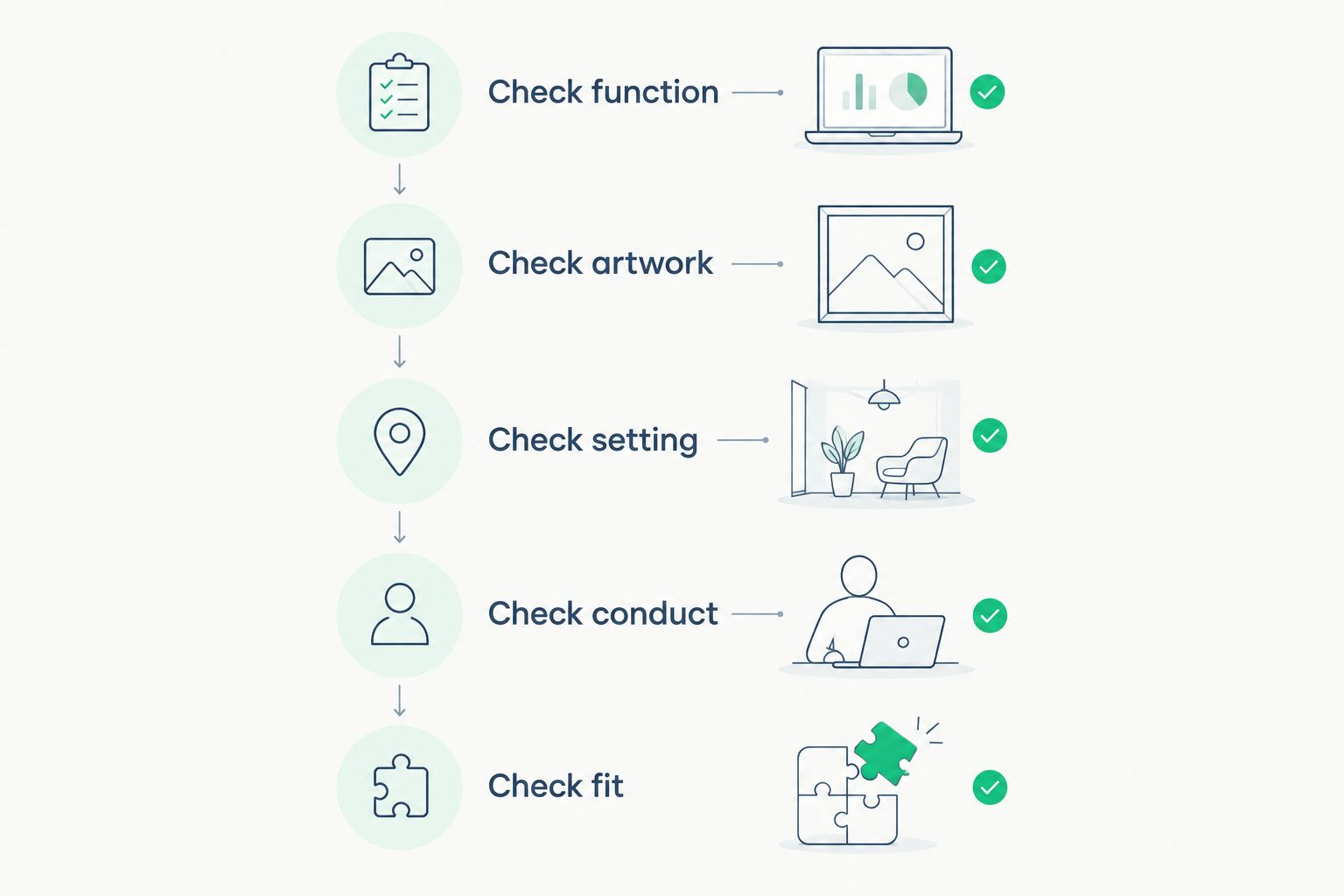
The first checks address classification and context; the last prevents a much less exciting failure. A patch that overhangs your hat panel is not a federal case. It is just a purchase you should have measured for.
For a specific legal concern, show an attorney the actual design and explain the intended use. “It's a morale patch” leaves out the facts needed to evaluate an official-insignia or impersonation issue.
Which morale patch makes sense for your gear?
Choose by message, fit, and attachment—not by imaginary ATF clearance. Stickthison sells decorative patches for gun owners and EDC enthusiasts; that buying decision is separate from selecting regulated equipment.
Two straightforward examples show the practical trade-off between a flag design and a joke. Neither is a credential, and neither grants an exception to venue rules.
| Patch | Best for | Stated specifications | Advantage | Limitation |
|---|---|---|---|---|
| American Flag Light Morale Patch (PVC) | A flag design rather than a written joke | Thick, 3D PVC; 3 inches × 2 inches; hook/loop backing | A defined rectangular size makes panel measurements straightforward | Requires a compatible attachment surface or another mounting solution |
| We Ain’t Found Shit Morale Patch | Range-goers who want a blunt punchline | Thick, 3D PVC; 3 inches high × 2.6 inches wide; hook/loop backing | Makes the humor the point of the patch | Profanity limits suitable settings; check its wider footprint against your panel |
The flag patch's 2-inch height differs from the joke patch's 3-inch height. Check orientation as well as width; turning a tape measure sideways does not improve your planning credentials.
Both examples use hook/loop backing. That is useful on a compatible panel, but it does not make them attach directly to every bare fabric surface. Read your bag or hat specifications instead of assuming that “tactical” means “everything sticks.”


Does an ATF answer settle range or workplace rules?
No—federal firearm classification and permission to wear something are separate questions. A patch can be ordinary merchandise while still violating a private range's posted rules or your employer's dress policy.
Before a 2026 match, class, or work event, check the organizer's requirements. If a rule is unclear, ask about the actual design rather than asking whether morale patches are legal in general.
Uniformed roles deserve particular care. Follow the applicable uniform policy instead of treating personal gear preferences as authorization to add unofficial insignia.
A removable patch gives you a practical choice: wear it where it fits the setting and leave it off where it does not. You can keep your opinion without turning the check-in desk into a constitutional-law seminar.
What should custom patch sellers check?
An ordinary custom patch does not need ATF firearm approval, but its artwork still deserves scrutiny. Official-insignia restrictions and intellectual-property rights remain separate considerations when you manufacture or sell a design.
Do not assume that finding an image online gives you permission to reproduce it. Likewise, adding a punchline does not automatically resolve every trademark, copyright, or federal-insignia question.
For a 2026 custom run, use artwork you have the right to reproduce and review any official-looking elements before production. Resolve design questions while they are still design questions—not after a box of patches arrives and everyone suddenly becomes an amateur attorney.
FAQ
Do I need ATF permission to buy a morale patch?
No—buying an ordinary decorative morale patch does not require ATF permission. A patch depicting a firearm is different from the firearm itself.
Does a morale patch need a tax stamp?
No—an ordinary decorative morale patch does not need an NFA tax stamp. Artwork showing an NFA-regulated item does not turn the patch into that item.
Can I wear a patch that makes fun of the ATF?
Political criticism and satire generally receive First Amendment protection. Separate rules still apply to true threats, impersonation, protected official insignia, and the setting where you wear the patch.
Is wearing an ATF patch the same as impersonating an agent?
Wearing a patch alone is not the full federal-officer impersonation test under 18 U.S.C. § 912. Falsely claiming federal authority and acting in that role raises a separate issue, while official-insignia restrictions also require attention.
Can a private gun range tell me to remove a patch?
A private gun range can impose dress and conduct requirements for its premises. A patch being outside ATF firearm regulation does not override those requirements.
Does PVC versus embroidery change the ATF answer?
No—PVC and embroidery do not change the firearm-classification answer for an ordinary decorative patch. Choose the material for your gear and preferences, not for supposed regulatory clearance.
Can I sell patches with an official federal agency seal?
Do not assume an official federal agency seal is unrestricted merchandise. Federal insignia rules and agency-specific restrictions require review of the particular design and intended use.
One last thing
A patch can depict a regulated object without becoming that object. That is the useful distinction to remember when a comment section starts issuing imaginary tax stamps.
Choose Stickthison morale patches for the joke or design, measure your attachment panel, and keep official credentials out of the cosplay. This is general U.S. federal-law information, not individualized legal advice; a specific insignia, functional device, or disputed interaction needs its own review.


Comments