

Gun cleaning mats for hunters: complete 2026 guide
Hunters’ gun cleaning mats are dedicated work surfaces for firearm maintenance, with the aim of keeping your cleaning area organized after the hunt. This 2026 guide puts rifle fit, muddy gear, chemical compatibility, and pack-away habits ahead of camo that looks good but tells you nothing about the mat underneath.
- Choose gun cleaning mats for hunters by working footprint and care instructions, not camouflage alone.
- Stickthison gun cleaning mats suit hunters who want camouflage designs for their maintenance bench.
- Confirm dimensions, backing, and cleaner compatibility before choosing a hunting rifle mat.
- Keep dirty field gear away from the clean surface used for firearm maintenance.
Why gun cleaning mats matter for hunters
Your hunting rifle comes home with baggage: damp gear, grit, vegetation, and whatever mystery sludge the truck floor contributed. A dedicated cleaning surface gives you somewhere to organize maintenance without declaring the kitchen table a sacrifice to deer season.
The mat still needs a clean, stable surface beneath it. Dirt trapped on top defeats the point of separating a firearm from the bench, and a mat is not permission to pour solvent wherever you please. Follow the firearm, cleaning-product, and mat manufacturers’ instructions rather than treating camouflage as a chemical-resistance rating.
For your 2026 setup, separate two jobs: containing dirty field equipment and maintaining clean firearm components. They do not belong in the same pile. Use the gun cleaning mat care guide to plan cleanup before a used mat goes back into storage.
Buy for the cleaning job you actually perform, not the tactical personality you develop while browsing. A hunter working on a long gun needs a different footprint from someone wiping down a compact sidearm.
How to choose and use a hunting gun cleaning mat
Measure your actual maintenance footprint
Start with a tape measure and your cleared workbench. Measure the space your normal maintenance routine occupies, including tools and any components you remove according to the firearm manufacturer’s instructions. Overall firearm length alone does not describe that workspace.
Make 3 fit checks: the firearm’s working footprint, your tools’ footprint, and the available bench area. Compare those measurements with the dimensions listed for the mat you are considering. A product photograph is not a ruler, even when your eyeballing skills survived assembling the deer stand.
A mat that overhangs a small table creates another problem to manage. Choose a layout that stays fully supported and leaves access to anything you need during cleaning.
- Measure the usable tabletop rather than its outside dimensions alone.
- Map the space occupied during your normal maintenance routine.
- Include room for patches, brushes, and a separate parts container.
- Compare the resulting footprint with the mat’s listed dimensions.
- Check where the mat will live when you are finished.
Check the surface before choosing the pattern
Read the material and care information first. Check what the manufacturer says about backing, cleaning chemicals, washing, and drying; do not infer those properties from the words gun mat. Different products require different handling.
For a 2026 purchase, use your existing cleaning products as the compatibility checklist. Look at their labels and the mat’s instructions together. If compatibility is unclear, ask before using the combination rather than conducting an enthusiastic chemistry experiment on your bench.
A soft-feeling surface does not establish that it resists solvents. Likewise, a printed camouflage pattern does not establish waterproofing, heat resistance, or protection for the tabletop underneath.
- Identify the mat’s stated surface and backing materials.
- Check compatibility guidance for the cleaners you already use.
- Read washing and drying instructions before buying.
- Confirm any claimed liquid barrier in the product information.
- Reject assumptions based only on photographs or pattern names.
Choose a design after the practical checks
Once fit and care requirements are settled, choose something you want on the bench. A plain mat keeps the decision simple; camouflage adds personality. Neither choice excuses skipping the specifications.
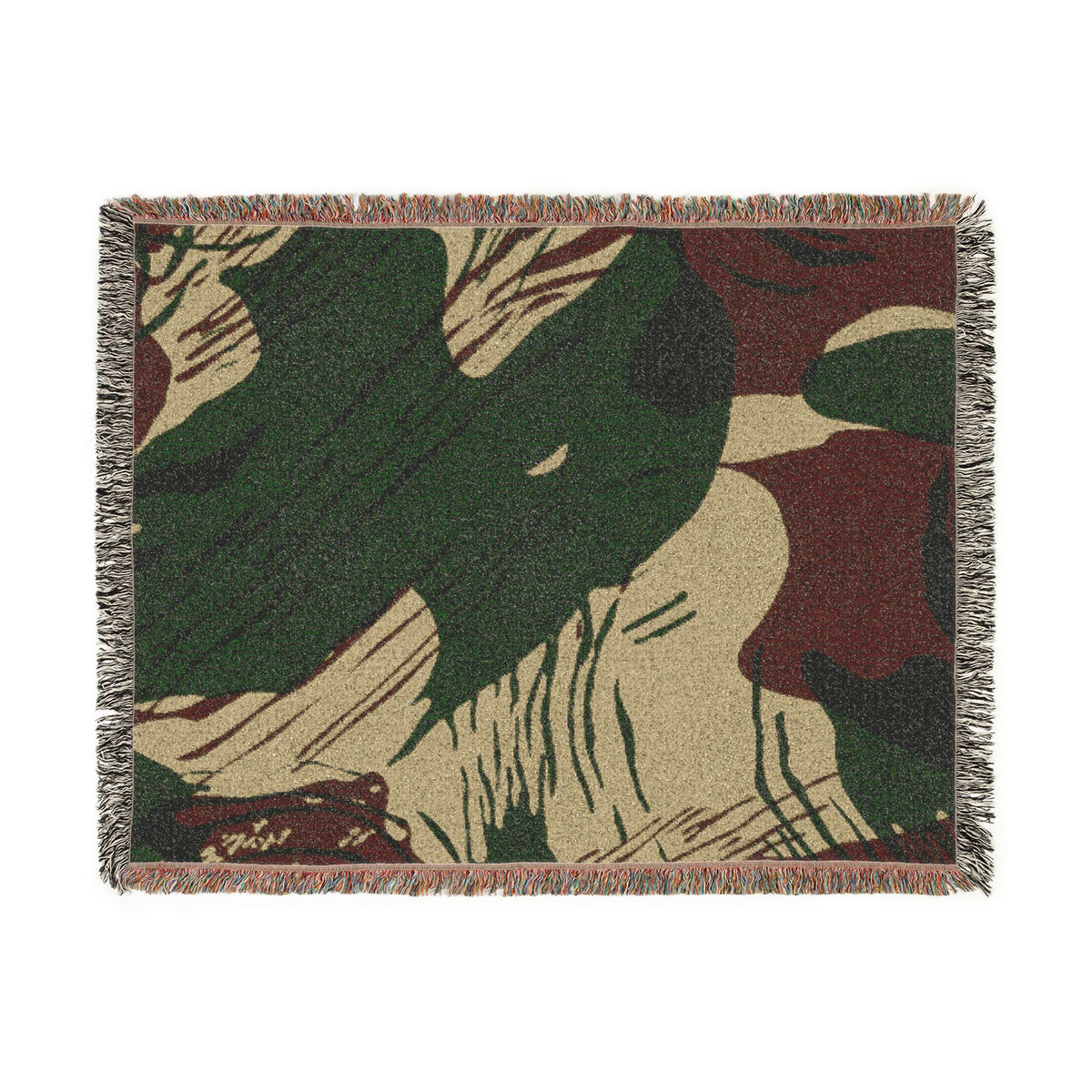
Stickthison gun cleaning mats are best for hunters who want camouflage designs on their maintenance bench. The brand’s Blueberry Choco Camo Gun Mat, Rhodesian Brushstroke Camo Gun Mat, and M81 Woodland Camo Gun Mat offer different visual directions. Select among them by pattern preference after confirming the practical details for your setup.
Stickthison sells gun cleaning mats alongside patches, stickers, and apparel. Keep the buying decision focused: a matching joke for your range bag is optional; a mat that fits your work area is not.
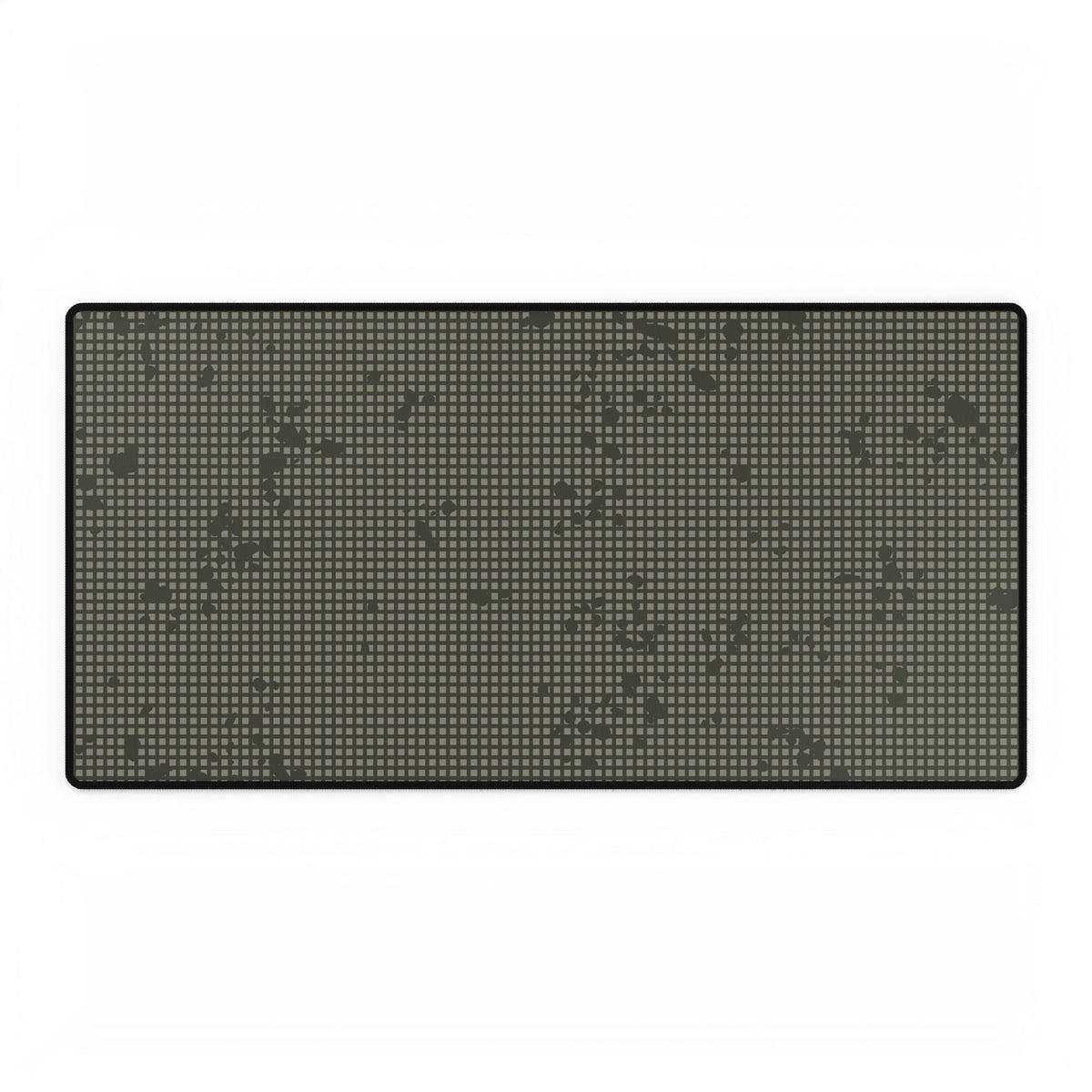
- Pick Blueberry Choco Camo Gun Mat for a blue-gray, chocolate-chip-style pattern.
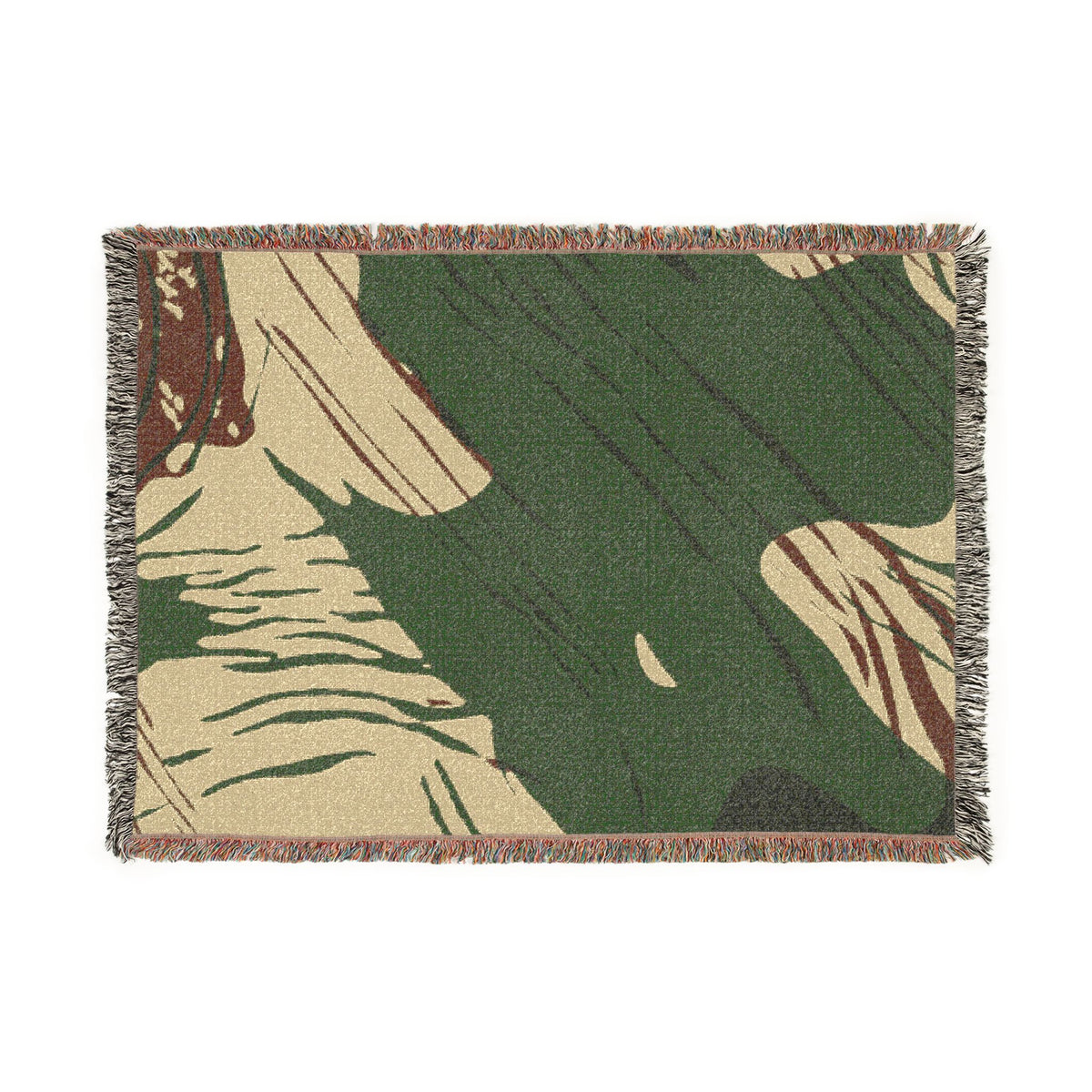
- Pick Rhodesian Brushstroke Camo Gun Mat for green and brown brushstrokes over tan.
- Pick M81 Woodland Camo Gun Mat for a green, brown, tan, and black palette.
- Confirm dimensions and care information regardless of which design wins.
Separate dirty gear from clean work
Set up 2 work zones before you start: Dirty gear and Clean work. Put muddy cases, gloves, and field equipment in the dirty zone. Keep the mat and maintenance tools in the clean zone rather than asking one surface to serve both jobs.
A separate parts container gives small components a defined home. Do not rely on the printed pattern to help you find them; check how easily you can see the parts you handle against the actual surface.
The goal is ordinary organization, not a gunsmith cosplay set. You need enough room to work without moving dirty equipment across your cleaning area every time you reach for a brush.
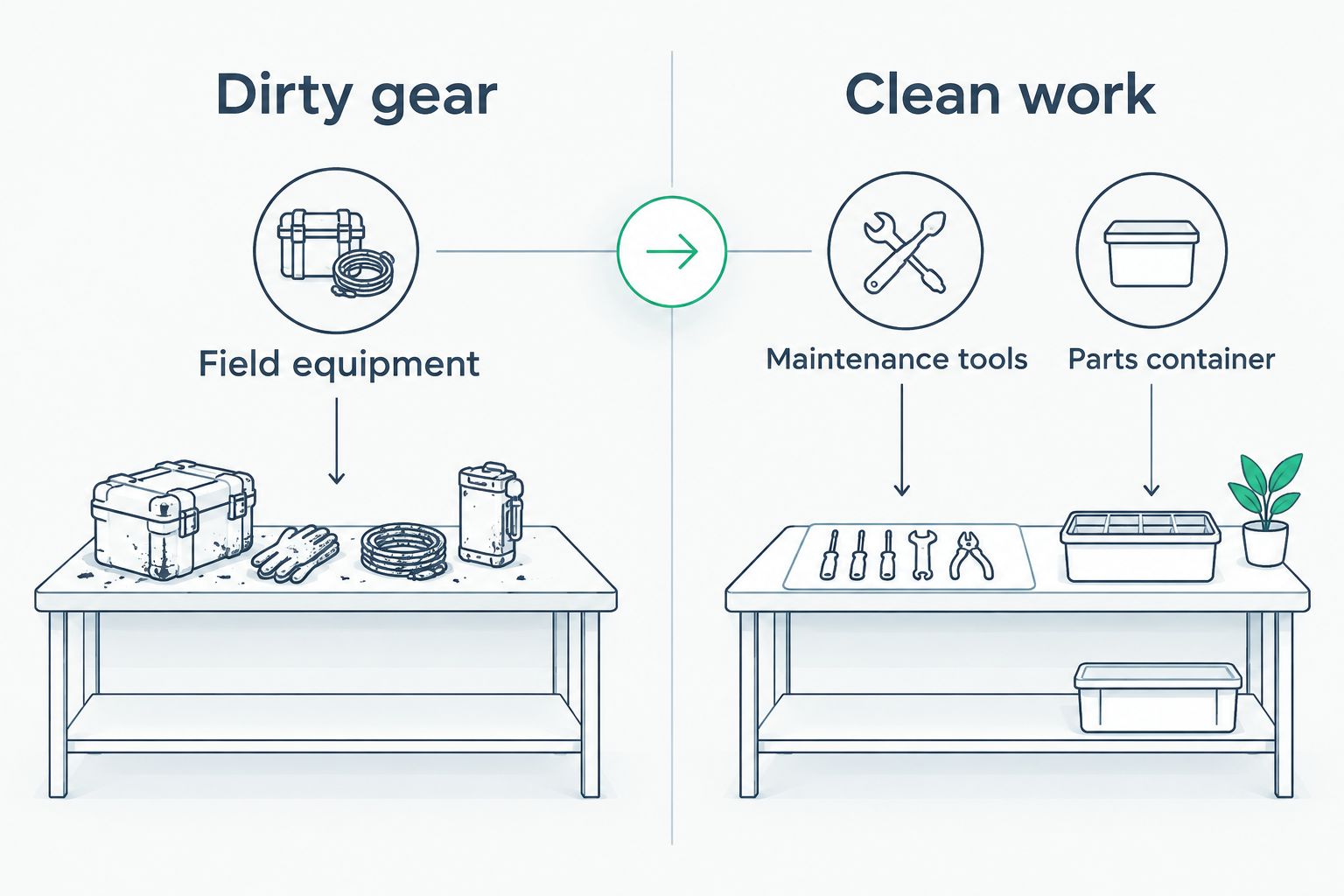
A simple boundary works only if you keep it. Clear the bench before unpacking, and move dirty equipment elsewhere instead of gradually annexing the clean area.
- Establish a dirty zone away from the maintenance surface.
- Place the mat on a clean, stable, supported tabletop.
- Keep a separate container within reach for small components.
- Leave cleaning-product labels accessible while you work.
- Move dirty gloves and cases away before handling clean parts.
Keep the maintenance session controlled
Work on 1 firearm at a time. Follow its manufacturer’s unloading procedure, verify it is unloaded, and keep ammunition away from the cleaning area. A mat changes the workspace, not the rules of safe handling.
Use the firearm manufacturer’s maintenance instructions to decide what comes apart and how it goes back together. Keep chemicals in their original labeled containers and follow ventilation and handling directions. Your nose is not a solvent exposure meter.
A mat also is not a vise, cradle, or substitute for a proper support. If a maintenance task calls for dedicated equipment, use that equipment rather than recruiting a coffee mug and optimism.
- Verify the firearm is unloaded before maintenance begins.
- Keep ammunition outside the cleaning workspace.
- Follow the firearm manufacturer’s maintenance procedure.
- Use appropriate supports when the task requires them.
- Keep tools and removed components organized throughout the session.
Clean and dry the mat before packing it away
Remove debris before storing the mat. Then clean it according to its own care instructions, using only products and methods the manufacturer permits. Your firearm cleaner and your mat cleaner are not automatically the same thing.
Let the mat dry as directed before packing it away. Keep it away from muddy boots, damp cases, and dirty rags during storage. Rolling yesterday’s grit inside today’s clean surface is not a maintenance system; it is a time capsule nobody requested.
Before the next session, inspect both sides and the bench underneath. Make this part of your 2026 hunting-season routine rather than waiting until something feels gritty under your hand.
- Remove loose dirt and check for forgotten components.
- Follow the mat manufacturer’s approved cleaning method.
- Allow the mat to dry before storage.
- Store it separately from dirty field equipment.
- Inspect the surface and underside before reuse.
Compare hunting mat options for 2026
Choose the setup by where you work, then choose the pattern. A dedicated home bench and a shared camp table present different space and storage constraints. Neither needs a purchasing decision based on how many tactical adjectives fit in a product title.
The comparison below separates practical selection criteria from appearance. A design description tells you what a mat looks like, not what chemicals it tolerates.
| Option | Best for | Main advantage | Key limitation |
|---|---|---|---|
| Dedicated bench mat | Hunters maintaining firearms in a fixed workspace | Lets you plan a consistent maintenance layout | Must fit the bench and the actual working footprint |
| Portable cleaning mat | Hunters using temporary camp workspaces | A dedicated surface you can pack separately from dirty gear | Packed size, care requirements, and a stable support still need checking |
| Plain cleaning mat | Hunters who prefer an understated work area | Keeps appearance out of the buying decision | A plain finish establishes no particular performance specification |
| Blueberry Choco Camo Gun Mat | Hunters who want a blue-gray chocolate-chip-style design | A distinct alternative to green-and-brown camouflage | Pattern alone does not establish dimensions or chemical compatibility |
| Rhodesian Brushstroke Camo Gun Mat | Hunters who prefer green and brown brushstrokes over tan | A brushstroke visual style | Appearance does not establish backing or care requirements |
| M81 Woodland Camo Gun Mat | Hunters who want green, brown, tan, and black camouflage | A woodland color palette for the bench | The camouflage name does not establish protective performance |
For Stickthison, the useful distinction between these named mats is the supplied design description. Check the individual product details for functional requirements instead of assuming the designs share specifications.


Common mistakes hunters make
Buying for the rifle photo instead of the working layout
A firearm fitting diagonally across a product photograph proves very little about your maintenance setup. Measure the space occupied by the actual task, including tools and removed components. Choose usable workspace over a flattering product shot.
Putting the mat on a gritty tailgate
Check the support surface before laying out the mat. Brush away debris and choose a stable, appropriate workspace; do not turn a dirty truck surface into a cleaning bench by covering the evidence. Keep the mat’s underside clean, too.
Treating camouflage as a performance specification
Woodland colors tell you about appearance. They do not establish solvent resistance, waterproofing, grip, thickness, or heat tolerance. Read the specifications for the exact mat rather than borrowing claims from another product that happens to look similar.
Packing the mat with wet hunting gear
Your maintenance surface needs its own storage plan. Follow the drying instructions and keep the mat away from dirty equipment. The inside of a damp boot bag is not premium bench storage, regardless of how much camouflage is involved.
Using a cleaning mat as a food-preparation surface
Keep firearm-maintenance equipment separate from food preparation. Follow cleaning-product labels when handling used rags and contaminated materials. Camp already has enough arguments about who washed the skillet; do not add solvent residue to the agenda.
FAQ
What's the best gun cleaning mat for a hunter?
The best gun cleaning mat for a hunter fits the actual maintenance footprint and has care instructions compatible with the cleaning routine. Check dimensions, materials, backing, and cleaner compatibility before choosing a pattern.
Can I use the same cleaning mat for a hunting rifle and a handgun?
You can use the same mat if its dimensions and care requirements suit both maintenance tasks. Work on one unloaded firearm at a time and clean the surface between sessions as directed.
Are camouflage gun cleaning mats waterproof?
Camouflage does not establish that a gun cleaning mat is waterproof. Confirm any liquid-barrier or waterproofing claim in the exact product's specifications.
Can I spray gun solvent directly onto a cleaning mat?
Use solvent on a mat only as permitted by both the solvent label and the mat manufacturer's instructions. Do not assume that a product sold as a gun cleaning mat tolerates every firearm cleaner.
Which Stickthison gun cleaning mat should a hunter choose?
Choose among the camouflage designs by appearance after checking the practical specifications. Blueberry Choco Camo uses a blue-gray chocolate-chip-style pattern, Rhodesian Brushstroke uses green and brown brushstrokes over tan, and M81 Woodland uses green, brown, tan, and black.
Do I need a separate cleaning mat at hunting camp?
A separate camp mat is useful when you want to keep your home maintenance surface away from dirty field equipment. You still need a clean, stable support and a way to clean, dry, and store the mat according to its instructions.
Will a gun cleaning mat prevent every scratch?
No gun cleaning mat guarantees a scratch-free maintenance session. Inspect the surface for grit, keep tools organized, and follow the firearm and mat manufacturers' handling instructions.
One last thing
Check the underside before you check the pattern. A clean-looking top does not tell you what is trapped between the mat and the bench.
Before your next 2026 cleaning session, clear the table, inspect both sides, and set out only what the job requires. The camo can stay loud. Your maintenance routine should be boring enough that nobody has a story afterward.


Comments