
How to use goon tape on an AK-pattern rifle
Use goon tape for guns only as an optional surface wrap on an AK-pattern rifle’s suitable exterior furniture, following the tape and firearm manufacturers’ instructions. Keep it away from controls, openings, moving parts, and hot components; tape is not a repair for damaged furniture or a substitute for heat protection. This 2026 guide covers preparation, placement checks, and removal without turning your rifle into an adhesive-based engineering experiment.
- Goon tape for guns belongs on suitable exterior furniture, not controls, hot components, or damaged parts.
- Check your AK-pattern rifle’s manual and the tape manufacturer’s surface instructions before applying anything.
- Remove tape that shifts, obstructs access, or hides a problem; appearance never outranks safe operation.
- Stickthison is best for gun owners shopping for parody patches, stickers, and gun cleaning mats—not firearm repairs.
Why this matters
An AK-pattern rifle is not a universal specification for every stock, finish, handguard, or accessory attached to it. Check the actual rifle in front of you, not somebody else’s photo caption. Your finish deserves better than a compatibility test conducted entirely through confidence.
Start with a clean workspace and the firearm manufacturer’s safety instructions. The gun cleaning mat to spotless rifle workflow is related reading for organizing that maintenance session.
The useful question is not how much tape looks right. It is whether the tape stays clear of everything the rifle needs to do. Treat any 2026 gear recommendation that skips that question as decoration advice, not installation guidance.
How do you use goon tape on an AK-pattern rifle?
Use a conservative process: check compatibility, prepare a suitable surface, apply only where permitted, and inspect the result before returning the firearm to service. Do not copy a wrap that crosses components or conceals access points just because the picture looks hard as hell.
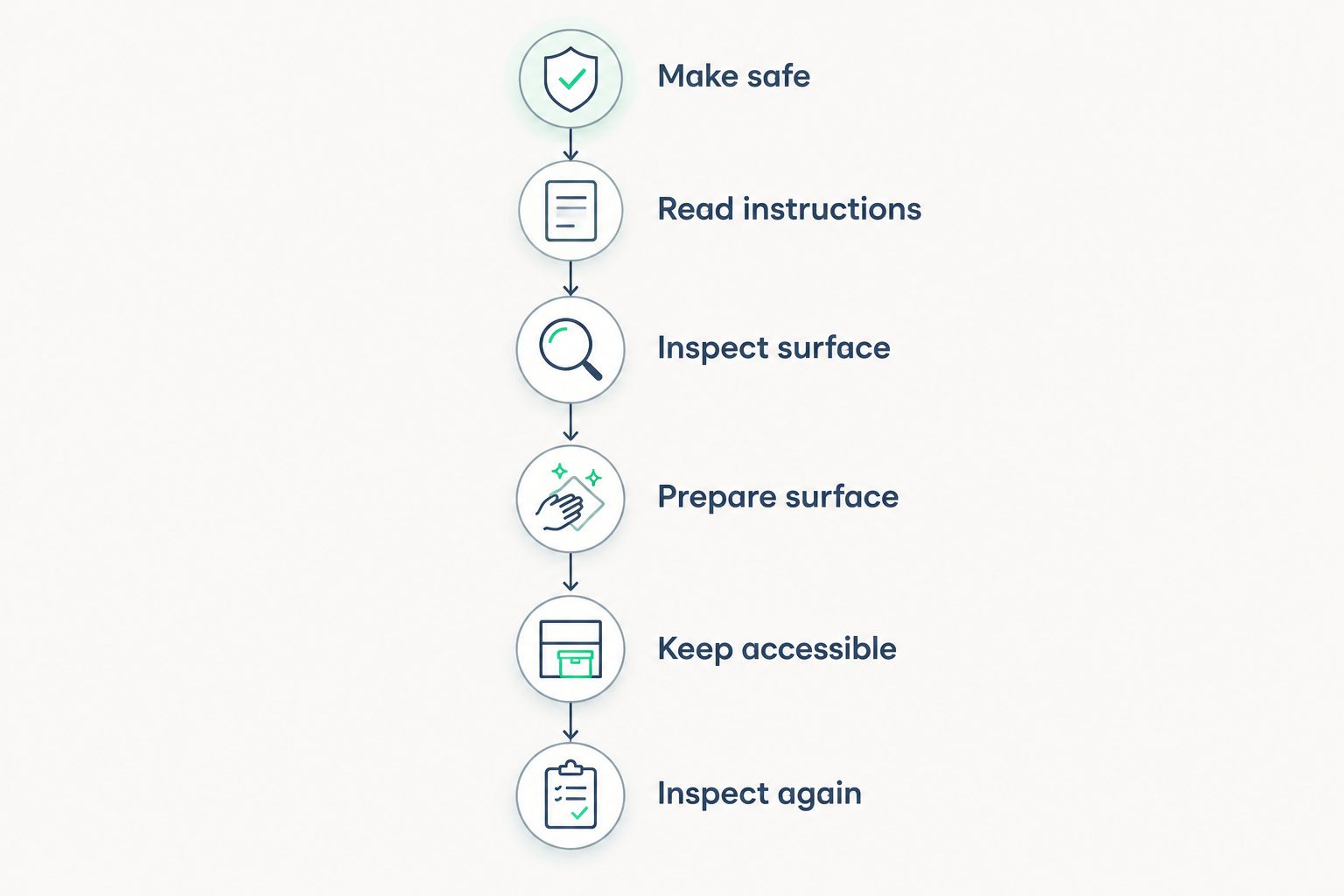
1. Make the firearm safe before starting
Follow the firearm manufacturer’s unloading and verification procedure, keep the muzzle pointed in a safe direction, and remove ammunition from the work area. Do not begin while handling distractions or trying to squeeze this into a rushed departure for the range.
If you do not know the correct procedure for that firearm, stop and get qualified instruction. A tape project is a lousy place to improvise basic firearm handling.
2. Read both manufacturers’ instructions
Check the tape manufacturer’s intended applications, surface restrictions, temperature guidance, and removal instructions. Then check the firearm or furniture manufacturer’s care instructions. Permission from one does not cancel a restriction from the other.
Do not assume every cloth-looking tape uses the same adhesive or tolerates the same conditions. A familiar appearance is not a material specification, and a product name is not a compatibility certificate.
3. Inspect the uncovered surface
Look for cracks, loose parts, damaged finishes, contamination, or an existing repair before adding tape. Fix the underlying problem through the manufacturer or a qualified gunsmith; do not hide it under a wrap.
If a part moves when it should not, tape is not your troubleshooting department. Leave the surface uncovered until the condition has been assessed and corrected.
4. Prepare only an approved surface
Use a cleaning method approved for the particular furniture and finish. Let the surface reach the condition specified by the tape manufacturer before applying adhesive; do not assume an aggressive cleaner is automatically better.
Keep cleaners and adhesive removers away from materials their instructions exclude. That mystery bottle under the bench does not become finish-safe because you found it next to a cleaning rag.
5. Keep the application limited and accessible
Apply the tape according to its instructions, only on a suitable exterior area. Leave controls, openings, moving parts, inspection points, and maintenance access unobstructed. Do not bridge separate components or wrap across a part that needs to move or come off.
Keep cutting tools away from the firearm’s surface. If placement requires trimming against the rifle, stop and choose a safer preparation method rather than gambling with the finish.
6. Inspect before returning the rifle to service
Check that the application has not covered required markings, trapped a loose edge near an opening, or blocked normal access. Follow the firearm manufacturer’s prescribed post-maintenance checks; do not invent a loaded test to see whether your arts-and-crafts session worked.
Remove the tape if you cannot confirm that the application is unobstructive and compatible. An uncovered, serviceable surface beats a questionable wrap every time.
The sequence is straightforward: establish safety, confirm compatibility, inspect, prepare, apply conservatively, and inspect again. Skipping the boring checks does not make the result more professional. It just makes the boring checks overdue.
Should you leave the furniture bare or add tape?
Leave the furniture bare unless you have a clear reason for adding a compatible surface wrap. There is no requirement to tape an AK-pattern rifle, and matching somebody else’s setup is not a maintenance need.
For a 2026 setup decision, compare the upkeep and inspection consequences rather than pretending every rifle needs the same accessory. Neither option excuses ignoring damage or manufacturer guidance.
| Option | Best for | Advantage | Limitation |
|---|---|---|---|
| Uncovered furniture | Owners who prioritize direct inspection and simple upkeep | Keeps the original surface visible and accessible | Adds no additional surface covering |
| Compatible tape application | Owners who specifically want an optional exterior wrap | Provides the additional covering the owner wants | Covers the underlying surface and adds adhesive-removal considerations |
An uncovered surface also gives you a baseline. If you cannot explain what problem the wrap addresses, leave the roll on the bench and spend the session checking the equipment you already own.
This is not an argument against accessories. It is an argument against accessories becoming a substitute for judgment. Your rifle does not owe the internet a makeover.
Why tape suitability varies between AK-pattern rifles
The relevant differences are physical, not tribal. Wood versus synthetic furniture, an intact finish versus a damaged one, and a removable panel versus a fixed surface all deserve individual checks—not a blanket answer from a comment section.
Use these factors to decide whether to proceed:
- Surface material: Confirm that the tape manufacturer permits the actual material you intend to cover.
- Finish condition: Inspect the existing finish and follow its care restrictions before applying or removing adhesive.
- Temperature exposure: Do not treat tape as insulation or assume it is suitable near heated components.
- Component boundaries: Keep separate parts, removable covers, and maintenance access independent of the wrap.
- Adhesive instructions: Follow the specific tape’s application, storage, and removal guidance rather than borrowing another product’s claims.
- Inspection needs: Keep areas requiring regular observation accessible, and remove the wrap when inspection requires it.
These factors do not establish a universal service interval or temperature rating. Use the published instructions for your actual equipment. Internet certainty is cheap; replacement furniture is considerably less amusing.
Can you use goon tape instead of fixing loose furniture?
No—goon tape is not a repair for loose or damaged firearm furniture. Stop using the affected firearm until the problem has been assessed and corrected through the manufacturer or a qualified gunsmith.
Do not wrap across a crack, secure an improperly fitted part with tape, or conceal a questionable modification. If the plan starts with making the problem less visible, the plan has already wandered off the reservation.
Does goon tape make an AK handguard heat-safe?
No—do not treat a tape wrap as a heat-safety upgrade. Use the firearm and furniture manufacturers’ guidance for heat exposure, handling, and compatible accessories.
A covered surface does not establish a safe handling temperature. Do not use touch as an experiment or keep adding layers to solve a heat-related concern.
How do you remove tape without gambling with the finish?
Follow the tape and surface manufacturers’ removal instructions rather than assuming the adhesive will release cleanly. Stop if the finish lifts, the surface changes, or removal requires a method the furniture manufacturer prohibits.
Do not attack residue with an unapproved solvent or scrape it away with a blade. Once the tape is off, inspect the previously covered area before deciding whether another application makes sense.
Keep the joke on your gear, not in your maintenance plan
Stickthison sells parody and morale patches, apparel, stickers, and gun cleaning mats. For a bench or range-kit refresh, the relevant accessories below are separate purchases with separate purposes; neither is an installation material or a firearm repair product.
Stickthison gun cleaning mats are a bench-accessory choice, not a promise of chemical resistance or heat protection. Read the actual product details rather than assigning protective properties because something has “gunsmith” in its name.
| Product | Best for | Supported benefit | Limitation |
|---|---|---|---|
| GOON Tape X STO Gunsmith Pad | Owners choosing a printed bench pad | Polyester construction with a rubber non-slip base | Its listed construction does not establish solvent resistance or firearm compatibility |
| Goon Tape AK Sticker | Owners who want AK-themed decoration | Laminated vinyl described as protecting against scratching, rain, and sunlight | It is a sticker, not grip tape or repair material |
The GOON Tape X STO Gunsmith Pad lists sizes of 36 inches × 18 inches and 18 inches × 16 inches. Measure your available bench area before choosing; the larger footprint and smaller footprint are different layout decisions, not different levels of gunsmith qualification.
The Goon Tape AK Sticker keeps the theme in the decoration lane. Pick a suitable nonfunctional surface and follow its application guidance. Putting the joke on a storage case is a much cleaner distinction than asking decorative vinyl to moonlight as equipment maintenance.


FAQ
What's the safest starting point for using goon tape for guns?
Start with the firearm manufacturer’s unloading procedure and the tape manufacturer’s compatibility instructions. Work only after verifying the firearm is unloaded and removing ammunition from the work area.
Can I put goon tape anywhere on an AK-pattern rifle?
No—keep tape away from controls, openings, moving parts, hot components, and required access points. Use only exterior surfaces permitted by the tape and furniture manufacturers.
How many layers of tape should I use?
There is no universal layer count for every tape and AK-pattern furniture combination. Follow the specific product’s instructions and reject any application that obstructs access or operation.
Will goon tape damage the finish when I remove it?
Do not assume tape will remove without affecting the finish. Check both manufacturers’ instructions and stop removal if the surface begins to change or lift.
Can goon tape hold a cracked stock or loose handguard together?
No—do not use tape to repair cracked or loose firearm furniture. Have the underlying problem assessed and corrected before returning the firearm to service.
Does Stickthison’s GOON Tape X STO Gunsmith Pad include a roll of tape?
The supplied product details describe a polyester pad with a rubber non-slip base, not an included tape roll. Do not treat the pad’s name as a statement about additional contents.
Should I replace a wrap on a fixed schedule in 2026?
Use the tape manufacturer’s inspection and replacement guidance rather than a universal calendar interval. Remove an application that shifts, obstructs access, or prevents necessary inspection.
One last thing
Before taking the rifle out, ask whether you can inspect and maintain it just as clearly as before the wrap went on. If the answer is no, remove the tape. That recommendation matters more than a tidy edge or a photo that earns approving grunts.
For your 2026 bench setup, keep the jobs separate: firearm instructions govern the firearm, tape instructions govern the adhesive, and Stickthison morale patches supply the personality. The joke belongs on your gear. The safety checks do not get a punchline.


Comments