
Can you iron on a PVC morale patch?
No—do not iron on a PVC morale patch unless its manufacturer explicitly identifies that exact patch as heat-applied and supplies application instructions. Hook-backed PVC patches attach to matching loop panels, not with an iron; heat risks damaging the patch, its backing, or your gear. For your 2026 range-bag setup, match the backing to the mounting surface and leave the laundry-room gunsmithing alone.
- Can you iron on a PVC patch? Not unless the manufacturer explicitly specifies heat application for that exact patch.
- Stickthison offers hook-backed PVC morale patches for gun owners who want removable patches on compatible loop panels.
- Hook backing needs a matching loop surface; plain fabric is not a substitute.
- A pressing cloth does not turn a hook-backed morale patch into an iron-on patch.
Can you iron on a PVC patch?
Do not treat a PVC morale patch as an iron-on patch just because it belongs on fabric. PVC describes the face material. The backing determines how you attach it, and those are different pieces of information.
Start by turning the patch over. A field of small hooks means you need a compatible loop panel; it does not mean you found a secret heat-activated adhesive. For mounting routes that keep the iron out of the conversation, see the guide to attaching a morale patch without sewing.
| Attachment option | Best for | Main advantage | Main limitation | Use an iron? |
|---|---|---|---|---|
| Existing loop panel | Swapping hook-backed patches on compatible gear | Removable attachment without modifying the gear | Requires a matching panel and suitable fit | No |
| Sewn-on loop panel | Adding a removable patch location to suitable fabric | The patch remains removable after the panel is installed | Sewing modifies the fabric; placement needs care | Not to attach the PVC patch |
| Adhesive-backed loop panel | Surfaces explicitly supported by the adhesive manufacturer | Adds a receiving surface without stitching | Adhesive compatibility depends on the surface and intended use | Only if that panel's instructions require it, with the patch removed |
| Manufacturer-specified heat application | A patch explicitly designed for that process | Uses the intended attachment system | Requires instructions for the exact patch and fabric | Only as explicitly directed |
The last row is not permission to experiment. If the product says hook backing and nothing about heat application, use the hooks. Your iron does not outrank the instructions.
Why this matters
A patch is replaceable. A damaged bag panel, hat, or jacket is a much more annoying souvenir of an avoidable experiment. Choose the attachment method before you apply heat, glue, or stitches.
The useful distinction for a 2026 patch purchase is not simply PVC versus embroidery. Either label describes the patch's construction, not a universal mounting method. Read the backing specification separately instead of assuming every patch works like the embroidered souvenir your aunt ironed onto a denim jacket.
A morale patch also is not a structural repair. Mount the joke where it belongs without obstructing zippers, buckles, adjustment points, or instructions on the gear. Personality is optional; access to your bag is not.
Hook-backed PVC patches: press onto matching loops
Hook-and-loop attachment works by engaging the hooks on one surface with loops on the other. Pressing compatible surfaces together creates the attachment; an iron adds nothing useful to that process.
Run a finger gently across the receiving panel. A loop panel has a soft, looped surface, while the patch's hook side feels rougher. Ordinary woven fabric, webbing, and a purpose-made loop panel are not interchangeable just because they all happen to be black.
If the patch arrives with a separate loop piece, distinguish that loose piece from a panel already secured to your gear. Sandwiching the patch and loose backing together does not attach either one to a hat. You still need an appropriate way to secure the receiving panel.
Best for: gun owners who want to move a patch between compatible bags, hats, and display panels. The advantage is removability; the limitation is that each destination needs the right receiving surface. No loops, no attachment—enthusiasm is not an adhesive.
Plain fabric: add a suitable receiving panel
A smooth hat front or plain jacket sleeve does not automatically accept a hook-backed patch. If you want the patch to remain removable, add a compatible loop panel using a method suitable for the garment or gear.
Sewing a separate loop panel is an option for fabric that permits stitching. Keep the PVC patch off the panel during installation, and check both sides of the proposed location before anyone starts sewing. An interior pocket is a lousy place to discover your new stitches.
For protective, waterproof, insulated, or otherwise specialized gear, check the manufacturer's modification guidance first. Do not assume a sewing needle or household adhesive is harmless just because the finished patch looks small.
Best for: suitable fabric that needs a permanent receiving panel and a removable patch. The trade-off is modification of the base item. If you are unsure about the construction, use a qualified alterations service rather than treating your range bag like a basic-training craft project.
Adhesive-backed loop panels: check the surface instructions
An adhesive-backed loop panel supplies a receiving surface, not a universal fix for every material. Choose one whose manufacturer explicitly supports the surface and conditions involved, then follow its preparation and application instructions.
Check whether the instructions address fabric, coatings, flexing, cleaning, and removal. A panel intended for a rigid indoor surface is not automatically appropriate for a flexible bag that gets dragged to the range. The word adhesive covers a lot of territory.
Keep the hook-backed PVC patch separate while installing the panel. If the receiving panel itself requires heat application, that does not authorize heating the patch sitting on top of it. Follow the panel's instructions and the gear's care restrictions together.
Best for: supported surfaces where stitching is unsuitable. The benefit is avoiding needle holes; the drawback is dependence on adhesive compatibility. If the instructions do not support your surface, choose another mounting method instead of adding more glue and optimism.
Why the right attachment method varies
Your 2026 mounting decision comes down to the actual patch and gear, not a generic tutorial featuring something vaguely similar. Check these factors before choosing a method:
- Backing type: Hooks, plain backing, and explicitly specified heat-activated backing require different attachment methods.
- Receiving surface: Existing loop panels accept compatible hooks; plain fabric needs a suitable mounting solution.
- Gear construction: Linings, pockets, coatings, and seams affect where and how you can add a panel.
- Manufacturer instructions: The patch, receiving panel, adhesive, and gear each have requirements that must agree.
- Patch footprint: Measure the usable receiving area against the patch's stated dimensions, including irregular edges.
- Removability: Decide whether you want to swap the patch or permanently alter the base item before installing anything.
Do not substitute a material name for that checklist. Two PVC patches can have different backings, and two similar-looking bags can have different panel arrangements. Inspect what you actually own.
How do you attach a hook-backed PVC patch without heat?
Use a matching loop panel and confirm that the patch sits securely without interfering with the gear. This 2026 setup check needs attention, not a temperature dial.
- Check backing. Confirm that the product description and the patch itself identify a hook-backed attachment.
- Check panel. Find an existing compatible loop surface or install a suitable receiving panel according to its instructions.
- Check fit. Measure the usable panel, position the patch, and keep it clear of openings and moving parts.
- Press flat. Engage the hook backing across the receiving surface rather than leaving the patch hanging by one edge.
- Check access. Open the bag, operate closures, and adjust straps to confirm that the patch does not get in the way.
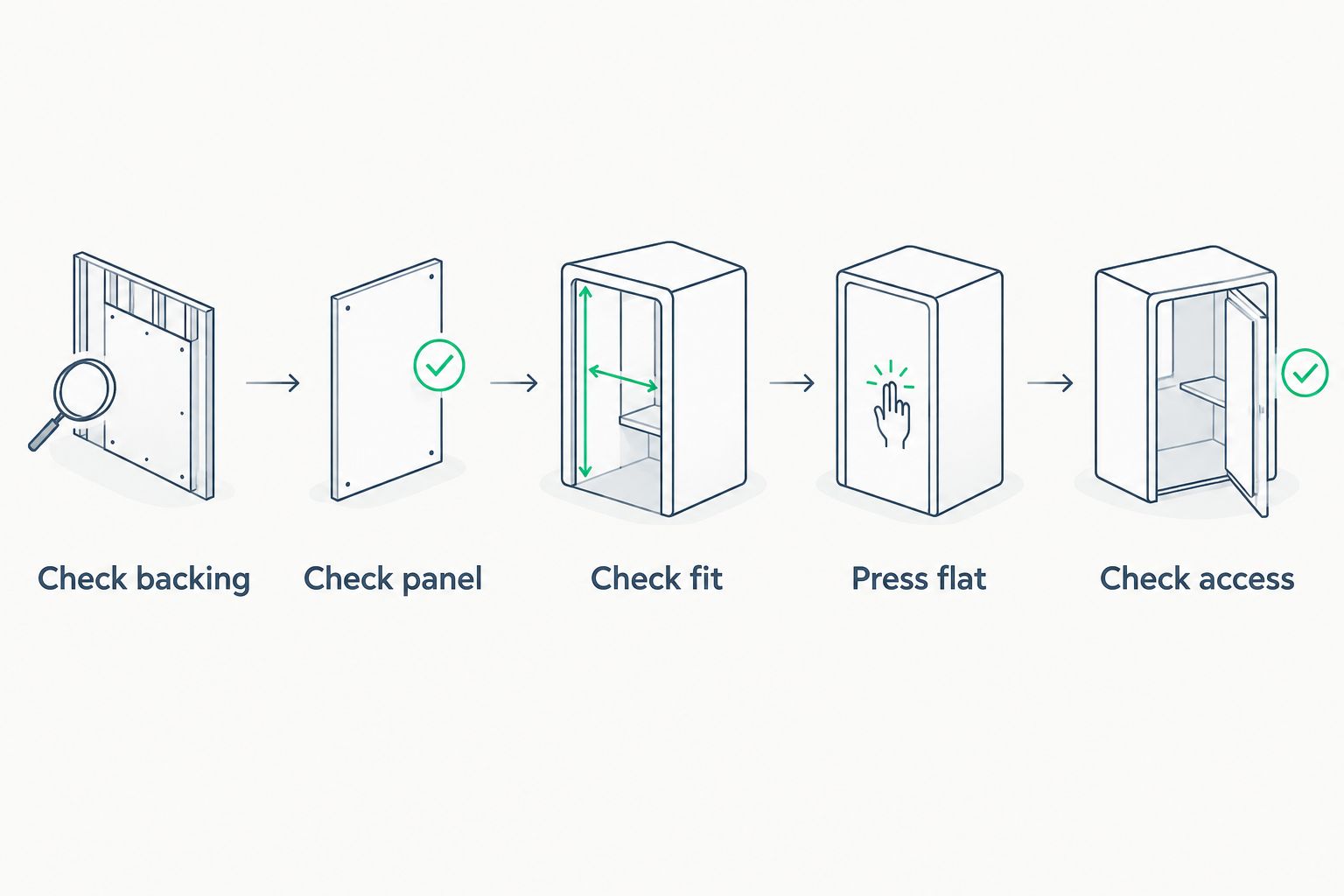
If an edge sticks beyond the panel, reposition it or choose a better-fitting patch. Do not reach for an iron to flatten an attachment problem into submission. Heat is not a replacement for adequate contact.
What should you check on an actual product listing?
Look for explicit backing and size specifications before choosing artwork. Stickthison PVC patches are best for gun owners who want parody designs on compatible hook-and-loop gear. The removable mounting is useful; the requirement for a matching loop surface is the catch.
These examples show why dimensions belong in the buying decision. Both list hook backing, so neither calls for ironing.
| Patch | Best for | Stated dimensions | Attachment advantage | Fit limitation |
|---|---|---|---|---|
| NOT GUNS Morale Patch | Range-bag parody on a compatible rectangular panel | 3 inches wide by 2 inches high | Listed hook/loop backing | Needs a receiving area that fits its footprint |
| USP Morale Patch | Gun-themed parody where a taller patch fits | 2.7 inches wide by 3.25 inches high | Listed hook backing sewn into the patch | Its taller footprint needs a corresponding panel |
The listed dimensions describe the patches, not a guaranteed fit on every tactical hat or bag. Measure your panel first. Buying the joke and then discovering it overhangs the hat is a very specific kind of self-own.


Will a towel make ironing a PVC patch safe?
A towel does not make an unspecified heat application safe. It separates the iron from direct contact, but heat still passes through it. Without instructions for the exact patch and fabric, you have not established a suitable process.
The same problem applies to ironing from the garment's reverse side. Changing which surface touches the iron does not change hook backing into heat-activated adhesive. It just gives the experiment a different angle.
Can you sew a PVC patch directly onto a jacket?
Sew directly through a PVC patch only when its maker specifies that attachment method. Do not assume a hook-backed patch also has a suitable sewing channel or border.
For a removable setup, install an appropriate separate loop panel on suitable fabric instead. That keeps the patch itself out of the sewing operation and lets you swap the design later. Check garment restrictions before modifying it.
What if you already put an iron on the patch?
Stop applying heat and let the patch and gear cool before handling or inspecting them. Check the patch face, backing attachment, and receiving fabric for visible distortion, separation, discoloration, or other damage.
Do not try to reverse damage with another pass of the iron. If the backing no longer engages normally or has separated from the patch, stop using it until the seller or manufacturer advises on that exact item. A flattened joke is still a damaged patch.
FAQ
Can you iron on a PVC patch if it has Velcro backing?
No—hook-and-loop backing is not an iron-on attachment system. Attach the hook side to a compatible loop panel unless the manufacturer explicitly supplies different instructions for that exact patch.
Can I use a heat press instead of an iron on a PVC morale patch?
Do not use a heat press unless the manufacturer explicitly specifies heat application for that exact PVC patch. Switching equipment does not establish that the face, backing, or gear tolerates the process.
Can I iron a PVC patch from the inside of my jacket?
Do not iron a PVC patch from inside the jacket without explicit manufacturer instructions. Heat still travels through the fabric, and hook backing does not become an iron-on adhesive.
How do I attach a PVC patch to a backpack without sewing?
Use an existing compatible loop panel for a hook-backed PVC patch. If the backpack has no panel, choose a receiving-panel system explicitly suitable for its surface and follow the manufacturer's instructions.
Are all PVC patches hook-and-loop backed?
No—PVC identifies the face material, not a universal backing. Read the exact product's attachment specification before choosing a mounting method.
Do Stickthison PVC patches need an iron?
The NOT GUNS Morale Patch and USP Morale Patch list hook-based backing, not iron-on attachment. Use a compatible loop panel and check the individual listing before mounting.
Can I glue a hook-backed patch straight onto my hat?
Do not assume a household glue is compatible with the patch backing and hat fabric. A suitable receiving panel preserves removable attachment; follow the panel and garment instructions before modifying the hat.
One last thing
Before your next 2026 range trip, check for an existing loop panel before buying mounting supplies. Sometimes the receiving surface is already there, quietly waiting while you negotiate with an iron.
Fix the surface mismatch, not the patch with heat. If you want to rotate designs, make the receiving panel the permanent part and keep the morale patch removable. Your sense of humor deserves an exit strategy.


Comments