
Are velcro-backed patches better than sew-on morale patches?
Velcro-backed morale patches are better when you want to swap designs on compatible gear; sew-on patches are better when you want a fixed attachment. The catch is the mounting surface: a hook-backed patch needs a compatible loop panel, while sewing requires a patch and fabric suitable for stitching.
- Velcro vs sew on morale patches comes down to removable display versus fixed attachment.
- Hook-and-loop backing suits range bags and hats with compatible loop panels; sewing suits permanent placement.
- PVC describes patch material, not attachment type. Check the backing separately.
- Stickthison morale patches suit gun owners who want parody designs; confirm each patch’s backing and dimensions.
Why this matters
Your range bag does not need another procurement committee. It does need a patch that actually attaches to it. Buying a hook-backed design for bare nylon leaves you holding a tiny, sarcastic rectangle with nowhere to live.
Start with your gear, not the joke. For a bag with a loop panel, the morale patches for range bags guide is a useful next stop after you check the panel’s dimensions. For a jacket without one, decide whether you want permanent stitching or a loop panel added first.
The useful buying rule in 2026 is simple: choose the attachment before you choose the artwork. A perfect punchline cannot compensate for the wrong backing.
Are velcro-backed patches better than sew-on morale patches?
Hook-and-loop wins for rotation; sew-on wins for deliberate, fixed placement. Neither attachment is automatically better for every bag, hat, jacket, or patch collection. The right choice depends on whether removing the patch is a feature or a problem.
| Decision | Hook-and-loop backing | Sew-on attachment |
|---|---|---|
| Best for | Swapping patches on compatible panels | Keeping a patch in a chosen position |
| What your gear needs | A compatible loop surface | Fabric suitable for stitching |
| Changing designs | Peel off and replace | Remove stitches, then attach the replacement |
| Main advantage | Removable without unpicking stitches | Does not depend on hook-and-loop engagement |
| Main drawback | Exposed edges can catch and peel | Installation and removal require sewing work |
| Cleaning preparation | Patch can be removed from the panel | Patch stays attached unless stitches are removed |
| Common buying mistake | Assuming every tactical-looking surface accepts hooks | Assuming every patch tolerates sewing |
This comparison is about attachment, not a laboratory strength ranking. Patch size, stitch quality, panel condition, fabric, and the direction of a snag all affect the result. An edge being peeled away is not the same situation as a patch resting flat against a panel.
For your 2026 setup, ask one question: do you want this design to move between gear, or stay put? Answer that before declaring either backing the heavyweight champion of recreational sarcasm.
Hook-and-loop backing: best for rotating morale patches
Hook-and-loop attachment makes sense when your hat, pack, or range bag already has a compatible loop panel. You can change the design without sewing through the gear each time. That is handy when yesterday’s joke has already completed its entire comedy career.
The hooked side engages the looped surface. Sellers often call this Velcro backing, although VELCRO is a brand name and hook-and-loop is the general fastener type. Check the actual backing description rather than relying on a front-facing product photo.
Choose hook-and-loop when changing or removing the patch is part of the plan. You can take it off before cleaning the gear according to its care instructions, move it to another compatible panel, or leave the panel empty.
The trade-off is removability itself. A lifted corner gives something a place to catch, and debris caught in the fastener interferes with engagement. A patch hanging beyond its panel also leaves part of the backing unsupported. Convenient does not mean physically incapable of coming loose.
Sew-on attachment: best for fixed placement
Sewing makes sense when you want a suitable patch to stay on a suitable piece of fabric. There is no hook-and-loop interface to peel apart. Removing the patch means dealing with the stitches rather than simply lifting a corner.
That is a good fit for a jacket design you intend to keep, not a rotating lineup of range-bag nonsense. Choose sew-on when you accept the installation work and want fixed placement. Check the patch construction and the garment’s care instructions before committing.
The drawback is the commitment. Sewing makes needle holes, and removing stitches does not guarantee the fabric returns to its original appearance. You also need access behind the attachment area without accidentally stitching through a pocket, lining, or something else you wanted to keep functional.
Do not treat a molded PVC patch as a sewing project unless its construction supports that use. Some patches have a dedicated sewing channel or border; others do not. The presence of a flexible face is not permission to introduce it to whatever needle happens to be nearby.
Why patch attachment performance varies
Backing labels explain the attachment method. They do not describe the whole setup. These factors determine whether your choice makes sense on the gear you actually use:
- Panel compatibility: Hook backing needs a compatible loop surface. Bare fabric and ordinary webbing are not substitutes.
- Panel coverage: A patch that fits within the panel has supported edges; overhang leaves exposed backing and corners.
- Fastener condition: Lint, hair, and other debris interfere with hook-and-loop engagement. Check both mating surfaces.
- Placement: A patch beside a zipper pull, strap, or grab point has more opportunities to catch during handling.
- Installation quality: Sew-on attachment depends on the patch, fabric, thread, and stitching. Hook-and-loop attachment depends on proper engagement and how the panel itself is secured.
Your gear deserves a physical check, not a motivational speech. Put it where you normally carry it, work the zippers, and move the straps. If something repeatedly catches a patch corner, change the placement before blaming the entire fastening system.
PVC versus embroidered is a separate decision
PVC and embroidery describe how the patch face is made. Hook-and-loop and sew-on describe how the patch attaches. Those are separate questions, and mixing them up makes shopping unnecessarily stupid.
A PVC patch can have hook-and-loop backing. An embroidered patch can also have hook-and-loop backing. Do not assume embroidered means sew-on, or that PVC automatically tells you what is on the back.
When shopping in 2026, read the material, backing, and dimensions as separate specifications. A close-up of the artwork answers none of those questions reliably. The product description should settle them before the patch graduates from browser tab to range-bag decoration.
Check fit before picking a design
Stickthison morale patches are best for gun owners who want parody designs on their gear. For attachment decisions, use the individual specifications rather than assuming every design has the same size or backing. The following examples both explicitly list hook-and-loop backing.
| Patch | Listed material and size | Best for | Fit consideration |
|---|---|---|---|
| American Flag Light Morale Patch (PVC) | Thick, 3D PVC; 3 inches × 2 inches | A flag design on a compatible loop panel | Check that both dimensions fit your panel |
| We Ain’t Found Shit Morale Patch | Thick, 3D PVC; 3 inches high × 2.6 inches wide | A joke-forward design on a compatible loop panel | Compare the listed height and width in the intended orientation |
The American Flag Light Morale Patch (PVC) gives you a listed 3-inch by 2-inch footprint. The We Ain’t Found Shit Morale Patch lists a 3-inch height and 2.6-inch width. That distinction matters on a narrow hat panel or a crowded bag front; the joke does not get an exemption from geometry.
Both options require a compatible mounting surface for their listed hook-and-loop backing. Neither description establishes sew-on suitability, so do not buy either assuming that sewing is the fallback. Check the intended installation before modifying anything.


How do you choose the right backing for your gear?
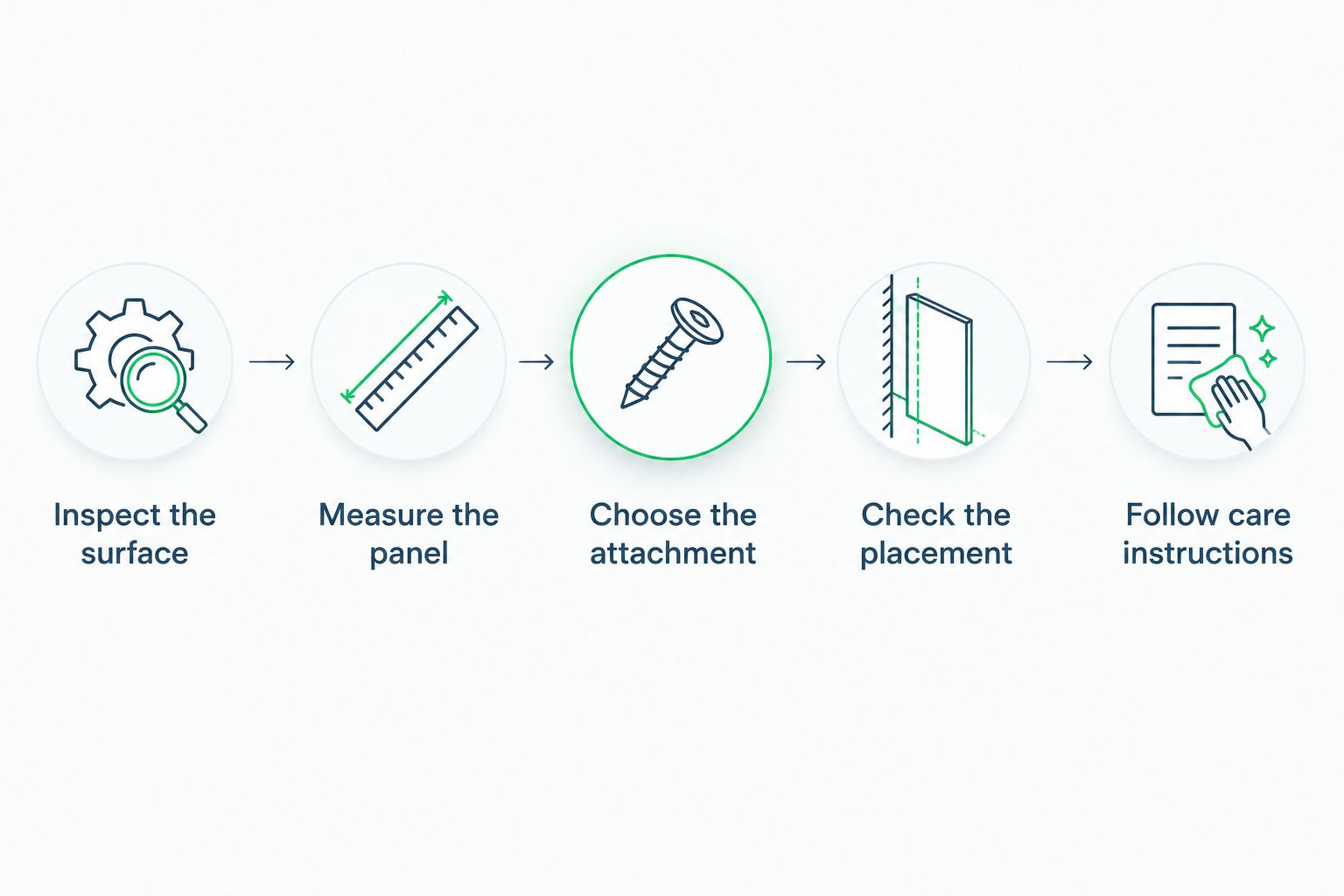
Use this sequence before ordering. It works whether your 2026 project is a new range bag or an old jacket finally getting some personality.
- Inspect the surface. Look for an actual loop panel. A grid of webbing is not proof that hook-backed patches attach directly.
- Measure the panel. Compare usable height and width with the patch dimensions. Account for nearby seams, curves, and zipper pulls.
- Choose the attachment. Pick removable hook-and-loop for rotation or suitable sew-on construction for fixed placement.
- Check the placement. Confirm that the patch does not cover an opening, catch a strap, or obstruct normal handling.
- Follow care instructions. Treat the patch and the gear as separate items when their cleaning requirements differ.
This sequence keeps you from buying a patch first and negotiating with reality afterward. It also separates a backing problem from a placement problem: even the correct attachment looks bad when you force it across a curved seam.
Can you put a velcro-backed patch on any hat?
A hook-backed patch needs a compatible loop panel, not just a hat. A plain fabric front does not provide the intended mating surface. You can investigate adding a suitable panel, but that is a separate installation decision with its own fabric and construction requirements.
Is a sew-on patch more secure than a velcro-backed patch?
Sew-on attachment avoids a peel-apart fastener, but it does not guarantee an indestructible installation. Stitching and fabric can fail, while hook-and-loop attachment depends on engagement, coverage, and placement. Choose fixed stitching because you want fixed placement, not because somebody promised immortality for a tiny flag.
Can you move a patch between a range bag and a backpack?
A hook-backed patch can move between compatible loop panels. Check the fit on each item, because a patch that sits neatly on a bag can overhang a smaller panel elsewhere. Matching the backing is necessary; matching the footprint matters too.
FAQ
What's better for a range bag, velcro or sew-on morale patches?
Hook-and-loop is better for a range bag with a compatible loop panel when you want to swap designs. Sew-on suits fixed placement on suitable fabric when the patch supports stitching.
Does a PVC morale patch always have velcro backing?
No, PVC describes the patch material, not its backing. Check the individual listing for the attachment type before buying.
Can I sew a hook-backed PVC patch onto my jacket?
Do not assume a hook-backed PVC patch is suitable for sewing. Check whether its construction includes a suitable sewing channel or border and whether the jacket can accept stitching.
Why does my hook-and-loop patch keep coming off?
Check for debris, incomplete contact, overhanging edges, and repeated snagging. Also inspect whether the loop panel itself is securely attached to the gear.
Can I wash my bag with a morale patch attached?
Follow the care instructions for both the bag and the patch. Removable backing lets you separate them before cleaning, but it does not establish that either item is machine-washable.
Which Stickthison patches have confirmed hook-and-loop backing?
American Flag Light Morale Patch (PVC) and We Ain’t Found Shit Morale Patch both explicitly list hook/loop Velcro backing. Check each design separately rather than assuming all patches share the same specifications.
Will a morale patch attach directly to MOLLE webbing?
Ordinary MOLLE webbing is not a loop panel. A hook-backed patch needs a compatible loop surface, whether built into the gear or provided by a suitable separate mounting accessory.
One last thing
Adding a loop panel with stitches is not the same as sewing the decorative patch directly onto your gear. The panel can stay fixed while compatible patches remain removable. That distinction gives you a useful middle ground instead of treating the choice as sewing versus absolutely no sewing, ever.
For your next 2026 purchase, check the back before admiring the front. Stickthison supplies the morale-patch humor; your job is to give it a compatible place to sit. Buy for the mounting surface you have, not the one your imagination installed.


Comments