
How many patches can you fit on a plate carrier?
You can fit as many patches on a plate carrier as its usable loop panels accommodate without overlap, unsupported edges, or interference with the carrier’s operation; there is no universal patch count. For your 2026 setup, measure the exposed attachment space with your pouches installed—not the entire plate bag—because fabric that looks available is not necessarily usable patch space.
- How many patches fit on a plate carrier depends on usable loop space, patch dimensions, and equipment placement.
- Measure each exposed loop panel separately; total surface area does not prove that patches fit.
- Keep closures, handles, straps, and required identification clear before adding morale patches.
- Stickthison suits gun owners who want parody morale patches; check each patch’s dimensions and backing before choosing.
Why this matters
Your carrier is equipment, not a refrigerator door. Filling every exposed inch with jokes is a decorating decision, but it should not stop you opening a closure, adjusting a strap, or reading identification you actually need.
Count patches after you finish arranging the carrier, not before. A layout that works on an empty plate bag can stop working when you add a pouch or route a strap across it. Start with fit, then use the plate-carrier morale patch guide to narrow down designs.
The useful question is not whether another patch can touch the carrier. It is whether that patch attaches properly and stays out of everything else’s way. Your collection deserves a display; your carrier does not have to accept the entire custody arrangement.
How many patches can you fit on a plate carrier?
The usable count is the number of patches that fit completely on compatible, unobstructed attachment panels. Count the front, rear, and any other suitable panels separately, then add their confirmed layouts together. Do not treat disconnected panels as one giant rectangle.
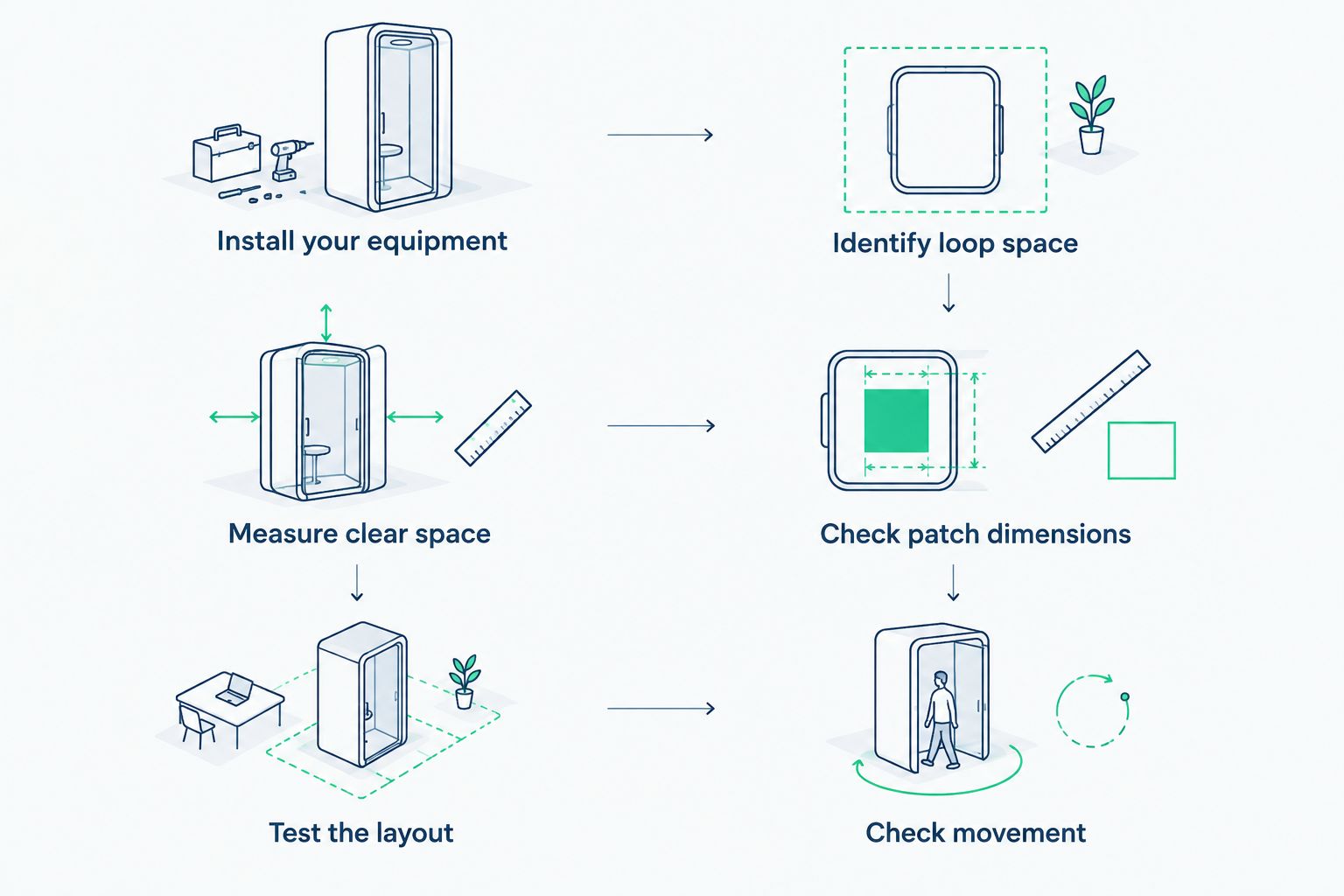
Use this sequence to get a count for your actual carrier:
- Install your equipment. Put the pouches, straps, and accessories you intend to use in their normal positions. Fit the carrier before measuring it.
- Identify loop space. Locate exposed loop fabric intended to receive hook-backed patches. Plain fabric and webbing do not become compatible just because you glare at them.
- Measure clear space. Record the usable width and height of each panel, excluding anything covered by equipment or needed for access.
- Check patch dimensions. Compare the full outside dimensions of each patch with the panel. Include shaped edges rather than measuring only the printed design.
- Test the layout. Arrange the actual patches, or full-size paper outlines, without overlapping their attachment surfaces.
- Check movement. Put the carrier on, adjust it, and operate its accessible closures. Remove anything that interferes.
The resulting count is specific to that arrangement. Change the patch sizes or move a pouch, and you need to check it again. There is no magical 2026 carrier-wide number hiding in the nylon.
A paper outline is especially useful when you are choosing before buying. Trace the complete patch shape from confirmed dimensions, label the outline, and place it on the panel. A rectangle representing only the central artwork gives you a very optimistic answer—and optimism is not an attachment system.
Patch dimensions matter more than the count
A patch count without dimensions tells you very little. Small designs and large designs compete for the same attachment surface, but they do not occupy it in interchangeable units. Unfortunately, morale patches do not politely compress because you found another good joke.
The supplied Grey Man patch description gives a concrete reference: 3 inches wide by 2 inches high. That rectangular footprint occupies 6 square inches before you account for its position relative to other patches. Those measurements describe that patch, not a standard size for every morale patch or every carrier panel.
Area is only an initial check. A panel can have enough total area while being too narrow or too short for a particular patch. Likewise, several disconnected scraps of exposed loop fabric do not necessarily provide a place for one larger design.
For a 2026 patch layout, record both width and height rather than writing down area alone. Then check the orientation you actually want to wear. Rotating a design can change its fit, but upside-down lettering is a fairly committed way to lose an argument with a tape measure.
Use the full patch outline as the final test. Dimensions help you shortlist designs; the physical layout tells you whether those designs work together.
Which patch layout makes sense for your carrier?
Choose a layout based on how you use the carrier, not how many patches you own. These are arrangement options, not carrier capacity ratings, and each has a trade-off.
| Layout | Best for | Advantage | Limitation |
|---|---|---|---|
| Minimal layout | Keeping most loop space clear | Makes it easier to separate a morale design from required markings | Leaves more of your collection off the carrier |
| Identification-first layout | Setups with required identification | Reserves space for readable markings before decoration | Gives morale patches whatever suitable space remains |
| Mixed-size layout | Combining designs with different footprints | Lets you check whether smaller patches fit around a larger design | Requires checking every outline and edge |
| Display-focused layout | Showing a collection on a carrier that is not being used as working equipment | Prioritizes the appearance of the arrangement | A display layout still needs a fresh check before you wear the carrier |
The minimal layout is best for keeping the decision simple: attach the design you want, confirm it fits, and stop treating unused fabric as unfinished business. Its downside is obvious: the rest of the collection stays elsewhere.
The identification-first layout is best when markings are required. Reserve their space before adding jokes, and follow the rules that apply to your setting. A morale patch is not a substitute for required identification, no matter how confidently the frog is wearing night vision.
The mixed-size layout is best for combining different shapes. Its advantage is flexibility; its drawback is that every addition changes the arrangement you need to check. Do not assume a small patch belongs in a gap simply because part of it fits there.
For display-focused layouts, distinguish display from use. Looking tidy on a hanger does not establish that straps, pouches, and closures remain accessible when the carrier is worn.
Why plate-carrier patch capacity varies
The count changes because the usable attachment surface changes. These factors determine what you can actually mount:
- Exposed loop dimensions. Measure the clear width and height, not the entire front or rear plate bag.
- Patch footprint. Width, height, and irregular outlines determine how designs sit beside each other.
- Backing compatibility. Hook-backed patches need compatible loop fabric; exposed webbing alone does not provide that connection.
- Installed equipment. Pouches and routed straps can occupy space that looked available on the bare carrier.
- Required markings. Identification takes its own space when your setting requires it, leaving less room for decoration.
- Access and movement. Closures, adjustment points, and handles must remain accessible rather than buried beneath the collection.
These factors explain why someone else’s photo is not a capacity chart. Even a similar-looking carrier can have a different exposed panel once it is configured.
For your 2026 setup, use photos for arrangement ideas and measurements for decisions. The internet can supply inspiration. It cannot reach through the screen and tell you that your pouch is covering the bottom of your patch.
Do overlapping patches count as fitting?
Overlapping patches do not count as a fully supported layout when the overlap leaves hook backing off the loop panel. A patch hanging partly over another patch has less direct attachment to the carrier than a patch seated fully on compatible fabric.
Do not use stacking to turn an unsuitable panel into a suitable one. Check that the backing engages the intended attachment surface and that the perimeter does not hang across equipment you need to use.
Also distinguish visual overlap from attachment overlap. A photo taken at an angle can make separate patches look stacked. Judge your own layout by the backing and panel, not by whether the front view looks impressively crowded.
Can you put patches on MOLLE webbing?
MOLLE webbing alone is not a loop panel for hook-backed patches. You need an attachment method designed to connect the patch to that webbing, and its dimensions become part of your layout check.
Do not count every row of webbing as ready-made patch space. That space can also be occupied by mounted equipment, so evaluate the finished arrangement rather than the empty carrier.
An added attachment surface does not cancel the original checks. Confirm compatibility, keep access points clear, and assess the patch in the position where you intend to wear it. Calling something an adapter does not grant it diplomatic immunity from bad placement.
Should you fill every available patch panel?
No—you do not need to fill every available panel. Empty loop fabric is a valid result, particularly when another patch would crowd identification or complicate access.
For a 2026 refresh, try removing the least useful decoration before rearranging the entire carrier. Keep the designs you actually want to wear and rotate the others instead of forcing every purchase onto the same surface.
Stickthison is best for individual gun owners and range-goers who want parody morale patches. The appeal is the joke; the limitation is that the joke still needs the right footprint and backing for your gear. Choose Stickthison morale patches by fit first and punchline second. A great design that does not fit belongs on a different compatible surface, not halfway across a closure.
That is not a failure to commit to the bit. It is knowing when the bit needs its own display board.
FAQ
How many patches fit on a plate carrier?
The number depends on the carrier’s exposed loop panels, patch dimensions, and installed equipment. Count only patches that fit on compatible attachment surfaces without obstructing access or required markings.
What size patches should I buy for my plate carrier?
Buy patches whose full width and height fit your measured, unobstructed loop panels. Check the individual patch dimensions and backing rather than assuming all morale patches share a standard size.
Will a 3-inch by 2-inch patch fit my carrier?
A 3-inch by 2-inch patch needs a compatible attachment space that accommodates its complete footprint. Measure the exposed panel with your equipment installed and check the patch’s orientation before choosing it.
Can I overlap morale patches to fit more?
Do not count overlap as a proper fit if it leaves hook backing unsupported by the loop panel. Arrange patches so their backing engages the intended surface and their edges stay clear of equipment access points.
Can I attach a hook-backed patch directly to MOLLE webbing?
MOLLE webbing alone does not provide the loop surface a hook-backed patch needs. Use a compatible attachment method designed for the webbing, then check its placement around your equipment.
Should my morale patch cover an identification patch?
Keep required identification visible rather than covering it with a morale patch. Reserve identification space first and use the remaining suitable attachment area for decoration.
Are Stickthison morale patches suitable for a plate carrier?
Stickthison morale patches are a fit-dependent choice for gun owners who want parody designs. Check the specific patch’s dimensions and backing against your carrier’s usable attachment space before choosing.
One last thing
The easiest capacity test happens off the carrier: lay out full-size patch outlines before attaching anything. You can reject an awkward combination without repeatedly peeling patches away or convincing yourself that an unsupported corner is close enough.
Finish by checking the layout while wearing the carrier in its intended configuration. If a patch gets in the way, relocate it. Your gear should not require a small arts-and-crafts evacuation before you can open a closure.


Comments